KOS

Achieve Strength & Conditioning

Unlocking the Power Within: How Boxing Elevates Mind and Body

Boxing, with its explosive and powerful nature, offers far-reaching benefits that extend beyond the ring. It’s not just about throwing punches; it’s a holistic approach to harnessing strength and conditioning. In the realm of fitness, the anaerobic style of boxing shines as a versatile contender for a wide range of workouts. But it’s not one-size-fits-all; it’s about crafting routines tailored to your unique physical needs and level of involvement.

In this article, we invite you to delve into the world of boxing and discover the remarkable ways it transforms both your body and mind. The journey to becoming unbreakable, both physically and mentally, is an art that demands unwavering determination, a solid foundation, and the guidance of an exceptional coach. And, as with any significant physical endeavor, it’s wise to consult a doctor before embarking on an intense training program.


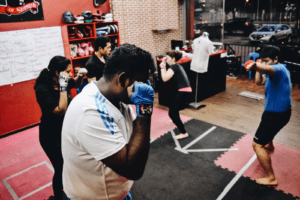
Boxing Class in Action - Practicing Punches
Boxing class in full swing, everyone perfecting their punch techniques.

How Boxing works in a nutshell

  • Provides a comprehensive full-body workout, targeting and toning all major muscle groups.
  • Strengthens and enhances the core muscles.
  • Offers valuable self-defense skills within the context of a combat sport.
  • Alleviates stress, anxiety, and pent-up aggression through the physicality of pounding heavy and speed bags.
  • As boxing becomes second nature, it becomes convenient to set up home boxing equipment for training.
  • Acts as an effective high-calorie burner, aiding in weight management.
  • Enhances the respiratory and muscular systems through anaerobic workouts.
  • Prioritizes performance and skill development over aesthetic outcomes.
  • Boosts self-confidence and self-esteem.
  • Fosters sportsmanship values despite being a combat sport.

Boxing is demanding. To understand how it helps the body in various ways. We have compartmentalized the structure of the sport into four significant phases.

 

Energetic Gym Goer Practicing Skip Ropes
A motivated gym enthusiast skillfully handles skip ropes during their workout.


Phase 1: The Warm-Up.  

Think of a warm-up as your essential first step, a friendly introduction before the real workout begins. It might seem gentle, but it’s the secret to making you stronger. Warm-ups consist of functional exercises that gradually limber up your joints and set them in motion. Always begin at a leisurely pace. Avoid passive stretching; save it for your post-workout cool-down. These activation exercises lay the foundation for your technical and strength training

  • Walking lunges get the hip joints in motion.
  • High Knee Walking does not stress the muscles, instead prepares the muscles for intense workouts.
  • Fast High Knees help pump up the cardiovascular and nervous systems, igniting them for the main workout.
  • Walking Butt Kicks is reaching out to your butt. It relaxes and knee flexors and the hamstrings.
  • Sumo Squats release the thigh tension. It works on the core, abdominals, and lower body.
  • Arm Circles is an upper body warmup to loosen the shoulders, forearms, and hands.
  • Jumping rope is much more than a warm-up exercise. It builds focus, hand-eye coordination, balance, and agility in footwork.
  • Boxer Push-ups help strengthen the shoulders and chest
  • Planks improve balance and help support posture.
  • Boxer Bicycle Crunches work on the abs, and legs and improve body coordination.

These are just a few exercises to activate your body and fire up your core. 


Happily Smiling Boxer Lifting Dumbbells
Our skilled and joyful boxer, confidently lifting dumbbells, ready for the ring.


Phase 2: Strength Training

Strength training, sometimes called resistance training, forms the foundation for muscle development and motor skill enhancement. This phase prepares a boxer’s body for more robust, quicker, and more powerful movements. Think of these exercises as functional, performance-focused workouts rather than mere demonstrations. They’re designed to elevate an athlete’s physical capabilities, employing compound exercises that engage multiple joints and muscle groups simultaneously.

  • Pull-ups work on the posture, back, rear shoulders, and biceps. To give you that vast space so you can take cover from or hit your opponent.
  • The seated cable row exercise works on the back muscles and forearms.
  • Triceps Pushdowns are a great way to build muscle and work on the arms. If you have sustained a prior elbow injury, it is suggested you practice under supervision.
  • Dips are considered superior to push-ups. You lift your entire body weight, unlike pushups. Building body mass and majorly improving your lockout strength.
  • The Overhead press builds strong arm and shoulder muscles. To shower those iron fists at lightning speeds on the opponent.
  • Shadow boxing: It may look like throwing punches in the air. However, results depend on the intensity of your workout. Shadow boxing improves boxing skills, overall body fitness, stance, and flexibility.
  • Sparring: It helps develop speed, control, and defense tactics. Sparring is an essential form of training to help you familiarise yourself with real-life boxing ring situations.
  • Agility Ladder: This drill can have numerous variations and improves footwork tremendously.  

Boxers should also incorporate free weight exercises into their training regimen because boxing is a dynamic and mobile sport.


Female Boxer Focused on Lunges
A determined female boxer demonstrates perfect form during lunges.


Phase 3: Power Training

Power training demands quick and agile movements, but it also comes with a heightened risk of injury. To prepare for power training, you first establish a strong foundation through strength training. The correct technique is crucial at this stage. As you become/ attuned to your body’s rhythm and capabilities, you’ll naturally adapt to the necessary techniques and fluidity. Remember, every move in boxing has a scientific aspect. Engaging in power training elevates your speed, stability, and overall technique to a higher level.

  • Back squats: They strengthen the lower body. The correct technique where the hips extend and go lower than the knees transfers the force from the feet to the hips, the core, and effectively when you launch up to punch. Back squats maximize the jump in return aiding the impact of your punch.
  • Clean and Press: Lift as much weight as the body can take retaining its right position. It demands the tightening of the core and back, throughout. Hip extension plays a vital role in balancing the weight of your body. Keep the bar/dumbbells/kettlebells moving except for brief pauses between sets. Squats take power from the ground up to hand, as boxing requires.
  • Kettlebell Training: Boxing requires ballistic movements.  The kettlebell exercises the muscles, their contractions, and speed. The generation of force after training is how boxers pack that powerful punch. Basic movements like one and two-arm swings, clean, press and push presses are essential before moving on to more complex exercises.
  • Resistance Bands: Core strength is a must for reliable and powerful movements. It helps in rotational exercises.

Here are a few example exercises to incorporate into your routine. The aim of power training is to engage in dynamic exercises that provide your body with a significant power boost without leaving you feeling overly fatigued.

Phase 4: Conditioning

In the boxing ring, maintaining a relentless yet rhythmic pace is crucial. This is where conditioning takes center stage. Conditioning mirrors the demands of an actual boxing match, requiring brief but intense bursts of exercise. While exercises like bench presses, mountain climbers, burpees, and pushups contribute to conditioning, boxing requires a unique approach to fitness.


Two Female Boxers Engaged in a Boxing Spar
Two fierce female boxers passionately engage in a sparring practice.


Conditioning involves high-intensity interval training (HIIT), a method that fine-tunes your body through anaerobic activities. It consists of swiftly alternating between fast-paced exercises in short bursts, with minimal to no rest in between.

  • Battle Rope: 30-40 seconds of intense waving works on the upper body. There are multiple variations to use ropes. Take breaks with light footwork and get back in action with flexible arm movements but a firm lower body and core. Repeat.
  • Heavy bag: Work your punch combinations on the heavy bag for 30-60 with squats after each combo and repeat.

Mix your sets with activities like sprints, leisurely jogs, high-knee jump ropes, and more. Customize your circuits to match your needs and abilities. Notably, shadow boxing stands out as the top choice for interval training, helping you maintain your stance and sharpen your skills.


After intense workouts always remember to relax your muscles to avoid cramps and muscle spasms. Gradually turn to passive stretching for up to 10 seconds to calm the body. These exercises include:

  1. Neck Rotations
  2. Hamstring Stretch
  3. Thigh Stretch
  4. Chest Stretch
  5. Quadriceps stretch


Boxer Demonstrating Precise Punching Technique
A boxer demonstrates the art of precise and powerful punching.


In the quest for ultimate strength and conditioning through boxing, we’ve unveiled the transformative power of this sport for your body and mind. So, grab a refreshing, calorie-rich drink, and consider joining us at KOS.

Remember, no matter life’s challenges, boxing will always stand by your side, offering its enduring benefits. Curious about our Schedule and Rates? Explore them here and take the next step in your journey with us.

Boxing vs Muay Thai: How to make an Informed Choice

Choosing Between Boxing and Muay Thai: Your Ultimate Guide to Stand-Up Combat Styles

In the world of stand-up combat, two formidable disciplines often steal the spotlight: Boxing and Muay Thai. You may be curious about the similarities and differences between these two striking sports. If you’re pondering which path to take in your martial arts journey, you’re in the right place. This article is your compass to navigate the distinct worlds of Boxing and Muay Thai, helping you make an informed choice that suits your goals and preferences. Let’s explore these fascinating combat styles together, shedding light on their unique characteristics and guiding you toward the one that resonates with you the most.

Boxing

Boxing, which has a rich history dating back to 688BC and originating in Greece, has been practiced for centuries before Muay Thai emerged. Interestingly, Boxing strictly prohibits the utilization of strikes involving knees, elbows, and legs. This martial art relies heavily on footwork, employing defensive techniques such as shoulder rolls, ducks, and slips, along with powerful jabs and hooks, all aimed at gaining victory over one’s opponent.

Muay Thai

Muay Thai, the esteemed National Sport of Thailand, is renowned as “The Art of Eight Limbs.” It embraces a unique approach where eight strategic points of the body are adeptly employed as formidable weapons. With hands emulating the precision of a sword and dagger, the shins and forearms function as protective armor against incoming strikes. The elbow, resembling a formidable hammer, is instrumental in delivering powerful blows to opponents. Moreover, the legs and knees emulate an axe and staff, further expanding the arsenal of this extraordinary combat art. Spanning several centuries, the rich history of Muay Thai contributes to its status as a profound discipline.


Focused KOS Boxer Practicing Precise Punches
Dedicated KOS Boxer Perfecting Their Punching Technique


Both these styles rising in Singapore. Amateur Training and fights are in demand. It is no surprise; that adults are turning to combat sports to activate their lifestyles. Let’s explore the differences between the two combat styles.


Boxing Muay Thai
Techniques
  • Boxing uses hands, wrists, and knuckles to pack powerful punches.
  • The focus is on the upper body. Boxing trains individuals to skilfully transfer energy from the foot to the fist. It involves mastering footwork and getting the stance right.
  • Is a more defensive style of sport
  • Boxing is fast-paced with combinations and swift punches.
  • Muhammed Ali, Frazier, and Mike Tyson are remembered for their boxing tactics and speed even today.
  • Muay Thai focuses on using the limbs, shins, elbows, knees, and forearms as weapons.
  • This combat style focuses on training light footwork, and basic punches, and improving hip flexibility, balance, and elbow/knee strength.
  • It is an attack-first style sport (offensive)
  • Muay Thai has tight combo strikes and then opponents retreat.
  • Saenchai is a living Muay Thai Legend
Style
  • The stance is narrow and the distance between opponents is shorter.
  • Hands are kept close but high, at unequal heights for hand strike and defense.
  • The side stance reduces the chances of getting hit in the chest, stomach, and hips.
  • Footwork in boxing is like bobbing to a rhythm. To keep a light foot and balance the body weight for swift, back and forth, and unpredictable movements.    
  • The stance is square with a longer distance among opponents.
  • Hands are up close and higher with elbows jutting out to attack first.
  • The square stance offers the fighter an opportunity to strike and counter kicks.
  • Footwork in Muay Thai is comparatively restricted. It is similar to taking strides. To balance well. The weight of the body is on the back foot, to lean and save oneself from strikes and forward when striking hard.   
Self-defense
  • Boxing may seem like a brutal sport. Instead, it turns out to be a self-defense style as compared to other combat sports.
  • Duck, slip, bob, shoulder roll punches, parry and block punches, clinching, the side stance, and circling the opponent are all, in fact, part of defensive moves.
  • Muay Thai is majorly an offensive combat style. Fighters do not dodge, instead, they only block.
  • For defense, they lean back or step away. They clinch, not to pause, but to knee the midsection.
  • Blocking punches with forearms and kicks with shins. These tactics absorb the attacks only to give them back with more power.
Body workout Though Boxing needs the upper body. The workout involves the entire body training. Boxing intensely strengthens the shoulders arms and back. However, the sport takes power from the feet to the hand, thus turning it into a full body workout making you sweat those fats like water. Muay Thai works on every muscle of the body. It is a blend of cardio, strength, conditioning, and endurance training. It gives your body definition. Makes your shins as tough as iron. Turns your elbows and knees into rock-solid armor. It is indeed a high-intensity fat-burning workout.


KOS Boxer Receiving Expert Guidance on Punch Techniques
KOS Boxer Receives Coach’s Instruction on Punching Form


When it comes to choosing between Boxing and Muay Thai, you’re not just selecting a sport; you’re embracing a way of life. Boxing hones your punching finesse, while Muay Thai offers the advantage of devastating kicks. It’s a captivating dance of two distinct worlds, each with its unique strengths. Remember, you don’t have to pick just one – integrating both styles into your training can make you a well-rounded fighter. Whether you’re a budding boxer or aspiring Muay Thai expert, the journey begins with the right instructor.

At KOS, we’re more than trainers; we’re your partners on this martial arts journey. Discover your path, explore your potential, and schedule your training with us today on our Schedule + Rates page.

Exploring Alternatives: When Skipping Isn’t an Option

Unlocking a Game-Changing Warm-Up Alternative for Boxing: No More Skipping!

Hey there, fitness enthusiasts!

I hope you’re all in great spirits and keeping up with your training. Today, I’ve got a game-changing insight to share with you. When I first ventured into the world of boxing, just like many of you, I was instructed to incorporate skipping into my warm-up routine. But here’s the kicker – I could barely manage a single skip! Frustration was starting to creep in, until one day, a wise coach pulled me aside and introduced me to a remarkable alternative.

Check out our YouTube video where Coach Kumar demonstrates the stair-stepping exercise and take your training to the next level!


All it takes is a simple flight of stairs, and you’ve got the perfect alternative to skipping. Whether you’re without a skipping rope or simply find it challenging, this stair-stepping exercise is your ticket to a fantastic cardio workout and that satisfying leg burn you’ve been craving. No fancy equipment needed – just you, some stairs, and determination.

Ready to give it a shot? Head over to our Schedule + Rates page and let’s keep this fitness journey rolling!

Cheers,
Head Coach Kumar

Boxing vs Kickboxing: What Do You Need?

Unlocking the Secrets of MMA: Exploring the World of Boxing and Kickboxing

Curious about MMA? Mixed Martial Arts (MMA) isn’t just a single sport; it is made up of Boxing, Kickboxing, Muay Thai, Brazilian Jiu-Jitsu, and Judo.

Boxing, with its roots dating back to 688 BC in Greece, has evolved significantly over the centuries, shaping the modern combat sport we know today. In contrast, Kickboxing, a relative newcomer, traces its origins to Thailand, drawing inspiration from Muay Thai and Karate.

So, whether you’re a seasoned fighter or just someone with a curious spirit, join us as we delve into the facts, advantages, and disadvantages of Boxing and Kickboxing together!

BOXING

Boxing is an energetic and rugged sport. It often leaves both the winner and the opponent with bruises and injuries. However, the real beauty of boxing lies in the transformation it brings to your body and mind. The enhanced stamina, endurance, and focus you gain through training are truly unmatched. If the intensity of the ring seems daunting, non-contact boxing offers equally valuable benefits.

Group class throwing punches with determination
Strength in numbers! Our class putting in the work with powerful punches.


KICKBOXING

Kickboxing, a fusion of Thai Boxing and Karate, stands as a unique sport. It incorporates a combination of kicks and punches, making it more susceptible to vulnerability compared to traditional boxing. Unlike Boxing, Kickboxing introduces elements like knees, elbows, and powerful kicks, creating a challenging environment for defense.


Boxing & Kickboxing


Boxing Kickboxing
Function
  • Boxing revolves around delivering powerful punches, primarily using the upper body.
  • But, the power starts from your feet, traveling up to your knuckles as you unleash a devastating punch.
  • It emphasizes agility in footwork, head movement, circling, sparring, and, most importantly, the synergy between mind and body.
  • Engaging in boxing is an exceptional way to burn calories.
  • Kickboxing offers a high-intensity cardiovascular workout.
  • As a martial arts discipline, it brings an array of health benefits. The combination of kicking and punching enhances balance and strengthens the entire body.
  • With a greater potential for strikes, kickboxing keeps fighters on high alert in the ring.
  • Moreover, it outperforms boxing when it comes to calorie burn.
Body workout
  • Works the upper body muscles (trapezius, deltoids, biceps, triceps, shoulders, abs, chest, and back).
  • Works the lower body muscles: Quadriceps, hamstrings, and glutes.
  • Utilizes all these muscles for punches, evasion, and defensive moves.
  • Relies heavily on the respiratory system for stamina during this intense, anaerobic activity.
  • Enhances conditioning and skills for maximum effectiveness against opponents or heavy bags.
  • Encompasses a full-body workout.
  • Offers benefits such as reduced body fat, improved flexibility, and a stronger cardiovascular system.
  • Emphasizes the need for proper warm-ups due to its high-intensity nature.
Self – Defense
  • Boxers primarily focus on training with their hands.
  • Developing focus and speed can lead to more impactful punches.
  • In the boxing ring, opponents tend to stay in close proximity since the sport limits strikes to punches above the belt. This close range can provide a defensive advantage.
  • In contrast to Boxing, Kickboxing maintains a greater distance between fighters, as the potential for unexpected kicks is higher
  • Kickboxing isn’t traditionally categorized as a defense-oriented sport.
  • Kickboxing tends to have a higher injury rate compared to Boxing.
Technique
  • In boxing, fighters typically stand sideways. This sideways stance reduces the target area for opponents to land punches and keeps them unpredictable.
  • The most effective defensive maneuver in boxing is to duck down and evade incoming punches.
  • Kickboxers usually adopt a square stance. This square position allows them to be ready to defend against both kicks and punches.
  • Stepping back or ducking to dodge punches in kickboxing can expose a fighter to the risk of a powerful hip-rotating kick from their opponent.
Body Type  

  • Don’t be misled by the idea that taller or bulkier fighters always have the advantage in Boxing. In this sport, each body type has its unique strengths.
  • Take Manny Pacquiao, for instance; despite being 1.66m tall, his big bone structure and 8-inch wrists give him a significant edge.
 

  • In Kickboxing, leg kicks are a dominant technique, making powerful lower body muscles essential. If you’ve had previous injuries, it’s wise to undergo a fitness check before diving into Kickboxing.
  • Regardless of your body type, speed and endurance are crucial attributes for success in Kickboxing.
  • Consider following the example of Buakaw Banchamek, a renowned 1.74m tall Muay Thai Kickboxer, to hone your skills in the art of Kickboxing.
Stress Reliever Boxing is both a physical and psychological activity. In our busy, sometimes monotonous lives, stress can pile up. That’s where jabbing combinations on a heavy bag come in. It’s an effective way to release frustration, ease anxiety, and channel aggression. For those moments when you’ve had a tough day at work or just need an outlet for pent-up energy, Kickboxing is a fantastic option. The act of punching and kicking bags can help reduce anxiety and bring a sense of calm to your mind.


Focused punch practice at KOS Boxing Gym
Precision and technique matter. Practice makes perfect at KOS Boxing Gym.

In these challenging times, we believe that it’s never too late to begin your fitness journey. Amidst the chaos of daily life, a simple gym routine might not suffice. At KOS, we’re not just offering you a chance to learn Boxing; we’re inviting you to embark on an experience that transcends the confines of the gym. It’s about discovering the discipline, strength, and mental clarity that Boxing brings to your life. So, why wait?

Take the first step today. Visit our Schedule + Rates page and start your transformative journey with KOS.

Never Skip This: Skipping Rope

The Essential Boxing Workout Tool: Jumpstart Your Fitness with the Power of the Skipping Rope!

Welcome to the world of boxing, where the simplest tools often yield the greatest results. If you’ve ever watched a boxing movie or stepped foot in a gym, you’ll know that one piece of equipment is as ubiquitous as a boxer’s gloves – the skipping rope, also known as the jump rope.

It’s not just affordable; it’s a must-have in the world of boxing. This unassuming piece of gear, a staple from our childhood, holds the secret to enhancing agility, boosting endurance, and shedding those extra pounds.

Young girl confidently skipping rope at KOS gym
A young athlete mastering her skipping rope skills at KOS gym.


1) Boosts Your Stamina

Think of skipping as your personal stamina meter. If you find yourself running out of steam after just a minute of skipping, consider it your starting point. You can even craft a simple home workout using your trusty skipping rope, experimenting with various skipping styles. Competitive boxers swear by this underrated tool! You can see different skipping styles in the video below.

Variety of skipping rope types, thick and thin, messily hung on a bar.
A collection of different skipping rope styles, ready for action.


2) Enhances Footwork and Movement in the ring

Struggling to stay light on your toes? Feeling sluggish compared to your ring opponent? Grab a skipping rope without delay! Skipping sharpens your mental and physical ability to stay nimble on your toes. If you can skip rope continuously, you’ll have no trouble staying light-footed and agile. It works wonders on muscles, especially your calves, ensuring you don’t stand still in the ring. And let’s not forget the coordination it hones!

Side view of a person jumping rope with precision
Perfecting agility and endurance through precise rope jumping.


3) Torch Those Calories!

Skipping isn’t just for sports; it’s a calorie-burning powerhouse! Did you know that a mere minute of skipping can torch 10-20 calories? Now, picture the calorie-blasting potential of a 30-minute skipping session! Still skeptical? Try skipping for 30 minutes daily for a week, and you’ll witness the remarkable difference. That’s the incredible power packed into that seemingly unassuming rope!

So, as you lace up your gloves and step into the ring, remember the humble skipping rope – your trusty companion on this boxing journey. From movie scenes to gym routines, it’s stood the test of time, proving its worth. Boxers rely on it for warming up, cooling down, and even shedding those last few kilos before a weigh-in. Don’t underestimate its power. Embrace the skipping rope, and you’ll see the difference it can make in your boxing performance.

Ready to take the leap? Check out our Schedule + Rates page to incorporate this incredible tool into your training regimen today.

Signing off with a fist bump,
Coach Kumar

GGG vs CANELO 2: The Rematch

GGG vs. Canelo 2: The Clash of Titans – Who Will Prevail in the Rematch?

Get ready for the highly anticipated GGG vs. Canelo 2, a showdown that promises to be anything but a draw this time. In the world of boxing, these two exceptional fighters need no introduction. But the burning question remains: Who will emerge victorious in this epic rematch? Let’s delve into the contrasting styles and strengths of Gennady Gennadyevich Golovkin, aka ‘GGG,’ and Canelo Alvarez, and discover what makes this clash of titans a must-watch event.


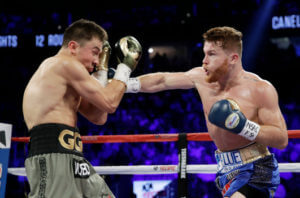
GGG delivers a potent blow to Canelo, while Canelo defends with tenacity.
GGG lands a powerful strike on Canelo, who defends with determination.


Gennady Gennadyevich Golovkin a.k.a ‘GGG’

GGG grabs attention with his unique boxing style—a blend of aggression and calm. He conserves energy, unleashing his aggression strategically. When not in attack mode, he’s the picture of composure, landing precise jabs and seamless follow-ups. His work rate is relentless, marked by a continuous flurry of jabs that keeps him in the action.

His exceptional footwork keeps him steady. Even if opponents dodge his jabs, he maintains his balance effortlessly. GGG’s strategic prowess shines through in his ability to control the distance while maintaining forward momentum, a testament to his confidence in range control.


Canelo delivers a precise punch to GGG, and GGG successfully defends himself
Canelo executes a precise strike against GGG, who effectively blocks the attack.


Canelo Alvarez

Canelo, a true fortress in the ring, resembles a tank with impeccable defense. His hands are perpetually up, forming an impenetrable shield. Renowned for his counter-punching prowess, he’s a master of timing, patiently awaiting the perfect moment to strike. His approach aligns with the “Study, Dominate & Destroy” philosophy. Recall his bout with Amir Khan, where Khan held the lead on points. Canelo’s patience and astute analysis paid off, leading to a fight-ending moment. While not the most active fighter, he exudes calm and steadiness, efficiently conserving energy. When the time is ripe, he deploys a devastating sequence of combinations that leave opponents reeling.


 Canelo skillfully blocks an incoming attack from GGG.
Canelo expertly blocks an oncoming strike from GGG during their match


So, who will you be cheering for in this epic showdown between GGG and Canelo?

As a devoted Canelo Alvarez fan, I’ve always admired his composed approach, advising my own boxer to adopt a similar strategy—stay calm and strike at the opportune moment, just like Canelo does. However, it’s hard to deny that in their first encounter, GGG posed a formidable challenge with his relentless aggression and forward-moving style.

While my gut feeling leans towards GGG potentially dominating this rematch, I’ll still be eagerly tuning in as a loyal Canelo Fan! Let’s all savor the upcoming match, boxing enthusiasts. Enjoy the match, everyone!


As we gear up for the thrilling GGG vs. Canelo 2 bout, it’s clear that this matchup is more than just a fight—it’s a testament to the dedication and skill of these incredible athletes. Whether you’re a fan of GGG’s controlled aggression or Canelo’s tactical brilliance, this rematch promises to be a spectacle.

If you’re eager to start your own boxing journey, check out our Schedule + Rates page. Let’s celebrate the spirit of boxing and enjoy the match together!

Signing off as a Canelo Fan,
Coach Kumar

6 Weeks Meltdown Programme

KOS’s Meltdown Programme: Your Path to Weight Loss

Hi Everyone!

Have you ever wondered how to shed those stubborn pounds or reduce your body fat percentage effectively? If you’re one of the many curious minds inquiring about KOS’s Meltdown Programme, you’ve come to the right place! In this blog post, I’m here to provide you with the answers and insights you’ve been seeking.


Who is expected to enroll in this program?

Anyone! Essentially, anyone who is struggling with weight loss or seeking to decrease their body fat percentage. Regardless of the reason, if your aim is to decrease your fat percentage, this programme is tailored for you!

Why should one choose this program over the numerous other weight loss programs available online?

Indeed, there is an abundance of such programs in existence, and I am neither disregarding nor making judgments about any of them. However, the Meltdown program distinguishes itself  from others as we have factor in elements such as time constraints, dietary considerations, financial implications, and other concerns that are relevant to our Singaporean lifestyle that have been taken into account.


6 Weeks Meltdown Programme Poster
Discover the journey to a healthier you with our comprehensive 6 Weeks Meltdown Programme.

When will the programme start?

I will be conducting a 30-minute workshop on Sunday, 9th September 2018 at 11.30 am. The purpose of this workshop is to provide a comprehensive outline of the plan for the upcoming 6 weeks. Participants are encouraged to bring forth any inquiries they may have for clarification. A plethora of weight loss tips will be shared during this session.

How will this programme work?

Hmm… That’s classified information. However, I can offer a subtle clue. Our focus extends beyond temporary weight loss that only yields short-term results. We place a significant emphasis on Metabolism Training and enhancement, which will assist in maintaining your shape even beyond the program’s duration! Oops, it appears that some unintended particulars have been divulged.

If you’re ready to embark on a journey towards a healthier, fitter you, don’t miss out on this fantastic opportunity. Our Meltdown Programme is more than just a weight loss plan; it’s a path to lasting transformation. I  have personally tested and refined this program, and we’re confident it can work wonders for you too.

Stop wishing for change – take action now. Explore the program details, schedules, and rates on our Schedule + Rates page. Let’s start this journey together!


Signing Off with A Fist Bump,
Coach Kumar

The Magic Substance To Achieve Your Goals: WATER

Unlocking Fitness Success: The Power of Water

Are you striving for a healthier, fitter you? Whether your aim is shedding those extra pounds, sculpting muscle, or enhancing your sports performance, there’s a secret ingredient that often goes unnoticed but holds the key to your success: WATER. Yes, you read that right. Drinking water isn’t just a simple daily routine; it’s the cornerstone of your fitness journey, the missing piece to your wellness puzzle.

Our bodies are primarily composed of water, and this vital substance plays a crucial role in numerous bodily functions. In this article, we’ll dive deep into the incredible benefits that come with staying adequately hydrated. Discover how something as simple as drinking the right amount of water can unlock your path to a healthier, more vibrant you. So, grab your favorite beverage, get comfortable, and let’s explore the remarkable world of hydration and fitness together.


Infographic - Normal vs. High Body Temperature
Explore how water affects your body temperature during your fitness journey. Stay cool, stay fit.

1) Regulates Body Temperature

This is the most important point, especially in Singapore, when we are living in such a hot climate.  Body temperature plays a major role in fitness elements such as muscle contractions, joint flexibility, and even your heart rate during exercise. The only way to get rid of the heat from our body is through perspiration and urination. Therefore, it is essential to ensure an adequate intake of water to regulate body temperature effectively.


Toxins Crossed Out
Flush out toxins with proper hydration. It’s time to eliminate the unwanted!

2) Flushes Toxins From Kidney

When we were young, we were taught to check if we were drinking enough water through the color of our urine. The rationale being, that we’ll know how much toxins we are flushing out from the body. Consuming an adequate amount of water enhances the circulation of water throughout our bodies, including vital organs like the kidneys. This allows the kidneys to wash off and remove toxins from the body.

Pop Sugar Post - Reason #1: You Don't Drink Water
The top reason you might not be losing weight: Are you getting enough water in your daily routine?

3) Reduces Fat Percentage

There are many studies to prove that water spikes up metabolism & improves your fat-burning rate. There is a great scientific explanation for it, however, I’ll do a simplified explanation. Metabolizing fat (Breaking down fat) is a primary function of the liver, however, the liver can only focus on its job if the kidney does its job. As mentioned above, the Kidney flushes off the toxins with the help of water. When there isn’t enough water in the body, the Kidney is unable to do its job alone and the liver comes in to help. Therefore, the Liver can’t focus on metabolizing the fat!


Water as a Sports Drink

The importance of water in fueling the body should not be underestimated. When considering athletic performance and maintaining proper hydration while participating in sports activities, there is added value in consuming water that has been treated, such as Alkaline Water.

Alkaline Water is regular water that has been alkalized to assist in balancing body acidosis. This offers numerous advantages to the human body, as illustrated in an infographic released by the esteemed local Water Company, AOX Water.

Remember, your fitness journey is fueled by something as simple yet powerful as water. Don’t wait until thirst strikes; keep that trusty bottle by your side. It’s the key to achieving your health and fitness goals. Ready to take the next step?

Explore our Schedule + Rates page to find the perfect fitness plan for you, and let’s embark on this journey together towards a healthier, happier you!

Signing off,
Coach Kumar!

The Myth: Boxing Is Unsafe

Unboxing the Reality: Debunking the Myths and Risks of Boxing

Although boxing is considered safer than activities such as horse riding, scuba diving, and gymnastics, it often carries an intimidating visual imagery. Notably, certain countries, including Norway, Cuba, and North Korea, have even prohibited professional boxing. Comparatively, sports like soccer and cricket may appear effortless, yet they do carry the risk of fractures, ankle sprains, ligament damage, as well as head and neck injuries. So without a doubt, boxing has the potential to cause both minor and major injuries.

The Common Myths

1. Boxing is a Dangerous Game

Boxing is not a game, but rather a combat sport. It involves adhering to a set of rules where the outcome is determined by an individual’s performance. To prioritize safety, the Amateur Boxing Association has implemented stringent guidelines that require rigorous physical, mental, and medical tests conducted by experts before each match.

 2. Boxing is two people punching to kill

While a first-time spectator may have preconceived notions, boxing is a multifaceted sport. Before stepping into the ring, fighters diligently prepare themselves by studying their opponents’ weaknesses and capitalizing on their strengths. It is a strategic contest, akin to an exam, where the more proficient athlete emerges victorious. In cases of significant blows or injuries, the referee promptly intervenes, and the scoring system determines the outcome.

3. Boxers pick fights

Boxers indeed engage in fights, but only in the context of self-defense. Through training, they develop self-confidence and clarity. Their ultimate goal is to avoid confrontations by utilizing defensive techniques such as blocks, ducks, rolls, and agile footwork to effectively evade any potential assailant. Punches are employed as a last resort, serving as a reminder that righteousness prevails over evil.


Two boxers practicing, one striking and the other defending
Intense training session as one boxer strikes while the other defends.


Common Boxing Injuries:

  • Fractures can affect the bones in the hand that connect the wrist to the fingers. Fractures in the nose, jaw, and ribs are also occasionally observed.
  • Cuts and bruises are a common occurrence and can happen anywhere on the body. In amateur boxing, cuts are rare due to the use of protective headgear, but they are more prevalent at professional levels. Once a wound has been properly cleaned and covered, it will heal.
  • Concussions can result from a severe blow to the head, causing the brain to move within the skull. They are considered as one of the most serious injuries in contact sports, often leading to a state of confusion or disorientation.
  • Dislocated shoulder, when promptly treated, poses fewer risks. Adequate rest for several weeks is essential for its healing process.


Precautions

In October 2017, bodybuilder Pradip Subramanian’s sudden death due to cardiac arrest in a celebrity Muay Thai fight hit the news. Thereafter, stringent actions were taken to regulate medical assessments of fighters before fights.

To minimize the likelihood of sports-related injuries, it is essential to educate oneself on the potential risks and adhere to safety guidelines. Specifically, in the context of boxing, it is important to familiarize oneself with proper techniques and follow safety tips. Additionally, ensuring the correct usage of headgear, mouth guard, hand bandages, and boxing gloves is crucial.

Boxing class warming up with planks
Boxing class gets ready for action with a plank warm-up.

Boxing is for everyone

Boxing is an inclusive activity that caters to individuals of all genders and ages. In today’s modern world, we face various pressures such as long work hours, family challenges, stress, and depression. Engaging in martial arts provides an opportunity for interactive and holistic self-care, offering a refreshing alternative to mundane gym routines. As long as there are no significant injuries, anyone from the age of 19 to 91 can participate and enjoy boxing.

For men, boxing offers a chance to take a break from demanding schedules and embrace the sport to enhance their overall fitness. Singapore is home to numerous boxing gyms, where men can connect with like-minded individuals and push themselves to achieve their best physical shape. Fathers can benefit from obtaining a fit and healthy physique, becoming role models for their children, and emphasizing the importance of health and well-being.

For women, boxing presents an opportunity to shed societal expectations and empower themselves through basic self-defense techniques. Learning these skills, alongside maintaining physical fitness, can contribute to personal safety and confidence in challenging situations. Additionally, boxing is beneficial in managing conditions such as postpartum depression, allowing women to be the mothers they aspire to be and the women they believe they can be.

For children, the early years of life establish the groundwork for their future. Encouraging children to participate in boxing helps them develop and cultivate healthy interpersonal and physical skills. Equipping them with self-defense abilities enables them to feel secure and confident in vulnerable situations. Boxing techniques foster eye-hand coordination, presence of mind, critical thinking, and quick responses, which aid in managing school-related stress and improving performance.


Guy practicing defensive boxing moves

Physical and Psychological benefits

Boxing offers a range of advantages for both the body and the mind. It promotes the development of strong muscles, which are essential for supporting the bone structure. Additionally, it provides an excellent cardiovascular workout that greatly benefits the heart. Moreover, boxing has been shown to help prevent conditions such as high blood pressure, high cholesterol, and diabetes.

It is worth noting that boxing is not a skill that can be acquired overnight. It demands significant commitment and years of training to truly master the sport. Nonetheless, individuals have the freedom to choose their level of involvement, whether it be for recreational purposes or a more serious pursuit.

It is widely acknowledged that a healthy heart is the cornerstone of a healthy body and mind. Boxing goes beyond just physical combat and is considered an art that can enhance an individual’s ability to resolve conflicts, both in the physical sense and in the realm of the mind.

Discovering the truth about boxing may have put some doubts to rest, but curiosity often leads to courage. If you’re no longer afraid and ready to step into the ring of this remarkable sport, KOS welcomes you with open arms. Our passionate coaches are here to make your journey enjoyable and safe. It’s time to experience the many benefits of boxing for yourself.

Let’s take the first step together. Book your free trial at KOS today and uncover a world of fitness, self-discovery, and empowerment that awaits you.

The Power Of Shadow Boxing

The Power of Shadow Boxing: Why It’s Essential in Combat Sports Training

Hey Everyone!

Today, we dive deep into a term that resonates not just in the world of boxing, but also in kickboxing, MMA, and Muay Thai – Shadow Boxing. It’s a phrase echoed in gyms worldwide, and if you’ve trained at KOS, you know I never skip a session without it.

But what’s the big deal, you ask? Why dedicate time to shadow boxing when there are modern equipment, coaches, and various drills at your disposal? Some might roll their eyes at the mere mention of it, but trust me, this post will shed light on the incredible power concealed within Shadow Boxing. So, join me on this journey as we unravel its secrets and unlock your full potential!


Diverse group of students passionately engaged in shadow boxing during training.
Dedicated students honing their shadow boxing skills with precision.


1) Perfect Exercise to help you warm up or cool-down

Shadow Boxing is an effective warm-up exercise that offers benefits not only to the body but also to the mind. It allows individuals to apply and reinforce previously learned techniques, while also promoting movement and engaging in punches that mirror the actual sport. As a warm-up option, it stands out from mere running routines.

In addition, shadow boxing can also serve as a cooling-down activity. This time, it provides a more relaxed experience for both muscles and the mind. Rather than executing fast-paced, forceful punches, it can be approached as a way to refresh and refine one’s skills. By practicing and executing movements at a slower pace, individuals can focus on specific details or nuances they encountered during the training session.


Female students showcasing their shadow boxing prowess with focus.
Empowered women in our gym mastering the art of shadow boxing


2) Improves Flow

One common issue many beginners face, let it be bag drills or sparring, stopping with one or two punches. Put simply, there seems to be a lack of flow in the different actions. The reason is, that there is no muscle memory of connecting a flow of punches. To overcome this, simply engage in shadow boxing, since there are no obstacles in the way of your punch, you can add in a few more punches to make it flow smoothly.


3) Creates Visualization

Similar to chess, in boxing, you improve when you visualize ahead. Visualizing ahead allows you to plan on what you should and what you shouldn’t be doing. Shadow boxing forces you to think of possible scenarios, which leads to correct follow-ups.

You can also try to adapt to new fighting styles with your Shadow Boxing Drills. For instance, you know that your opponent is a southpaw, therefore, there will be a few adaptations to take note such as where you move, what punches to throw, and even the entire game plan. Add those changes and practice it during your Shadow Boxing.


Students immersed in intense shadow boxing practice, giving it their all.
Intensive shadow boxing sessions: We push our limits to reach new heights.


4) Enhance Movements

Everyone learns how to throw a Jab, however, it is through continuous practice that one can refine and strengthen their technique. Shadow boxing exercises not only improve overall movement but also assists in refining crucial aspects such as head movement, punch execution, and footwork.  While you are shadow boxing, you’ll know what works for you and what doesn’t. Focus on what works for you and make that your strength. In short, Shadow Boxing is a great technique developer!


5) Lifetime Exercise

As time goes on, there could be some reasons that may make you want to hold back from punching the bag because it can be a bit hard on your body. Age might stop you from participating in sparring, but you can always keep doing Shadow Boxing no matter how old you are. It won’t hurt you or cause any injuries if you do it correctly. Plus, it’s a great way to get some cardio in!


Students practicing dodging techniques with dedication and determination.
Students practice dodging techniques with dedication and determination.


At King of Strength Boxing Gym, Shadow Boxing is more than just a warm-up; it’s a cornerstone of our training philosophy. It’s a ritual embedded in our training plan that shapes not only our fighters but also our community. Our competitive boxers swear by it, using it to mentally prepare for their fights. The shadow boxing experience allows them to visualize the venue, the energy of the crowd, the ring, and even their opponent, fostering a unique confidence before stepping into the real fight.


Check out our Schedule + Rates page and join us for a session soon – we can’t wait to see you in action and guide you through your boxing journey.

Signing off,
Coach Kumar