KOS

Three ways to improve your Boxing Speed

Unleash Your Boxing Speed

Curious about how to amp up your boxing speed? You’re not alone. Coach Krishna here, and I’ve got three killer methods that’ll have you punching like lightning. Say goodbye to sluggish jabs and hello to lightning-fast strikes. Let’s dive in and supercharge your boxing game!

Here are three easy ways:

1. Proper Technique

2. Think about going fast

3. Exercise


PROPER TECHNIQUES

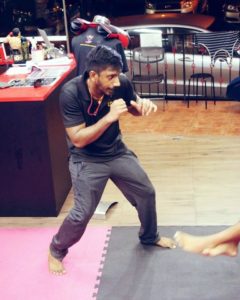
Boxing Routine Progression: Step-by-Step Visual Guide to Enhance Your Speed and Technique.

More than having high power or many knock-outs (KOs), you need to execute proper techniques. If your techniques are not proper, it is going to slow the whole process. Common mistake is to pull back and load your punch before releasing it. To work on this, release all punches that will be thrown from your chin with elbows tucked close to your body. This way, speed on the punches will improve.


THINK ABOUT SPEED

Mental Focus for Speed: Visualize Going Fast.

Keep telling yourself you want to go fast, punch fast, hit fast, without compromising your techniques. IT STILL COMES DOWN TO THE FIRST POINT. There is no point in throwing fast punches if you are going to be sloppy. Think of it like training with weights. When you train with weights daily, you’ll improve your strength. And with time, you will be able to lift heavier weights.
So, constantly think about speed when you do your training. Be it shadowing, pad work, bags, buddy-drills or even sparring!!! It is about being conscious on what you do and intensively working on it.


EXERCISE


• Weighted Punches

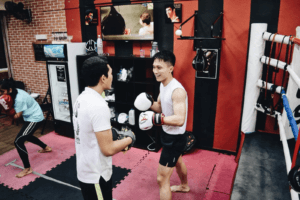
Enhance Speed with Weighted Punches: Illustration.

One way to increase your speed, is to pick up a light weight to add resistance to your punches. It can be around 1 to 3kg, depending on your fitness level. The idea is to throw punches with weights in each hand, increasing the difficulty and stimulating the muscles involved. Weighted punches are a great way to improve speed and you’ll definitely start to see improvements.
Try the various punches (jabs, straights, hooks, and uppercuts) with speed and power with every rep. Complete a couple of rounds, drop the weights and shadowbox as per usual.


• Speed Bag Drills

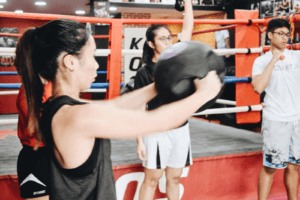
Mastering Speed Bag Drills: Illustrated Guide.

Speed bag is another way to work your hands and improve speed. It might take some practice, but once you get the hang of it, trust me you’ll be addicted. After getting the rhythm and pace, try to punch the speed bag as fast as you can. These drills improve your hand-eye coordination, momentum, timing and punch accuracy. It is honestly one of the best ways to improve your speed.


• Jump Ropes

Boost Speed with Jump Rope: Illustrated Workout.

Jumping rope helps to develop the muscle group for fast punches, particularly the fast-twitch muscle fiber in your upper back and shoulders. Try gradually increasing the speed when you jump. It is important because it trains all the necessary muscles to work faster than normal. To gain speed, you have to think of speed. Jumping rope also improves overall endurance. It is a skill that requires practice, so don’t get discouraged if you do not get the hang of it right away. With constant practice you will be able to improve your speed and develop this skill.


These are the ways which helped me and I hope it helps you too. Master lightning speed and impeccable technique. Embrace proper form, mental agility, and strategic exercises to boost your boxing finesse. Ready to enhance your skills? Join us now – check our Schedule and Rates

Signing off with a fist bump,

Coach Krishna (:

Heightened Alert FAQs

KOS Gym Updates: Reopening, Classes, Membership, and More!

Welcome back to KOS Gym, where your fitness journey continues! We’re thrilled to announce that our doors are wide open, and our weights are waiting. Read more to know about the important updates!

Q: Is the gym currently open?

A: Yes, we reopened our gym on 12 AUGUST 2021.

Q: What are the operating hours?

A: You may refer to our class schedule below. If you are not fully vaccinated, please check our website for the “Not Vaccinated” class timings.
*subjected to changes*

Group Training Schedule
Plan your fitness journey with our Group Training Schedule.

Q: Are there classes for those Not Fully Vaccinated/Not Vaccinated (NFV)?

A: Yes, we are offering classes (1 TB and 1 S&C) for those NFV.

You may refer to our website for the “Not Vaccinated” class schedule. *subjected to changes*

Q: Do we need to wear masks during training?

A: If you are Fully Vaccinated (FV) (more than 2 weeks since your second dose), you will not need to wear your mask during training.

If you are NFV, you will be required to wear your masks throughout your session.

Q: Will our membership packages be extended?

A: Yes, we have extended all packages accordingly from when our gym reopened.

Q: What are the packages available?

A: We have several packages for Group Training. Check them out below!

Group Training Package Prices
Affordable options for group training that fit your budget!

Q: Is there a free trial session?

A: Yes, there is a free session for our group classes. You may book a free trial session via our website.

Please take note that there is no free trial for Personal Training.

Q: Do you still have Personal Training sessions?

A: Yes, we do! If you are interested, you may either email us at info@kosboxingym.sg or DM us with your contact details, the goals you would like to achieve, and your availability.

Q: How much are your PT sessions?

A: We have several packages for Personal Training. Check them out below!


Personal Training Rates
Invest in personalized fitness with our competitive Personal Training rates.


Q: Any team bonding sessions for all KOS members?

A: Once the COVID measures are relaxed, we will plan bonding sessions for our members.

Q: Will KOS be opening another outlet in the future?

A: Yes! We have plans to expand in the coming future!

Q: Do you have any package for NSF?

A: Yes, we do. It is $297 for 3 months, unlimited sessions*. You just need to show your 11B at the counter.


Singapore Armed Forces Identity Card (11B)
Attention NSF members! Show your 11B and unlock exclusive deals.


Q: What are the different types of classes you provide at KOS?

A: We provide Technical Boxing – which teaches the techniques of pure boxing and Strength and conditioning – which focuses on improving stamina and helps with weight loss and toning of the body.

Q: Do you provide towels?

A: We used to provide towels for our trainees. However, due to the current Covid situation, we will not be distributing them till further notice.

Q: Do you provide gloves?

A: We provide gloves for your free trial. For subsequent classes, you will need your own gloves and hand wraps. If you do not bring your gloves, you may rent them with us at $5.

Q: How much are your hand wraps and gloves?

A: Hand wraps are $20, Gloves are $70.

Q: Are your KOS t-shirts still available?

A: Yes, they are. We are currently having a promotion, grab them at our counter soon as stocks are limited!
KOS T-Shirts and Promotion
Grab our stylish KOS T-shirts at a special promotion. Limited stock available!


Q: What is the difference between the beginner and king package?

A: Our beginner package is session-based whereas you are entitled to unlimited sessions* with our king package.

Your well-being matters to us, and we’re here to support your fitness journey every step of the way. If you’re ready to take the next step, head over to our Schedule + Rates page for all the details. Your fitness journey begins here!

*due to the current COVID situation, there is a limitation on the number of trainees per class. So we put a cap of 4 classes per week till the restrictions are relaxed.

Signing off with a fist bump,
Lekha


Get Regular Workout Benefits with a Boxing Fitness regime

What is intriguing about Boxers and their regimes?


They go through extraordinary extents and rigorous training. Boxing is not about fighting alone. It is a workout that boosts mental agility, improves focus and coordination, and blends aerobic and anaerobic exercise.


Boxing training is not only for the ring. It is a real-life skill that can help in numerous aspects of life. Our eating habits, lifestyles, and routines make us lethargic. Twenty minutes on the treadmill, 20 on the cycle and the other 20 with random exercises. You go back exhausted.


Forget the boring one-hour workout at the gym. Indulge in these workouts which will make you come back for more.


These are basic exercises one and all can do. If workouts in the Martial Arts entice your adrenaline, try Boxing.


Boxing includes all your basic workouts and more:

  • Heavy bag
  • Shadow boxing
  • Jumping rope
  • Weight training
  • Speed bag
  • Running
  • Stretching

Heavy Bag.

  • Start fight training and work your physique and weight loss starts gradually.
  • Hitting heavy bags build punching power and increase metabolism. It involves the legs and arms to power up and punches, in turn activating all the parts of your body. Sweat and see those fats burn like butter.
  • Workout: include legs, knees, and elbows to define your thighs and calves. Work in sets. Combination punches and kicks with shadow boxing or squats for 30-60 seconds. Repeat.  


KOS

Shadow Boxing.

  • Shadow boxing helps professionals loosen up joints and warm up before actual drills.
  • Basic knowledge of punching techniques and footwork can create a shadow boxing workout to aid weight loss. It is like fighting an imaginary opponent.
  • Workout: Throw combinations, change stance, work on your hip movements. Shadow Boxing is a package deal.

Jumping Rope.

We have all at some point had a jumping rope lying at home. Other than tripping over it multiple times. The benefits are it yields are humongous.

  • It is a conditioning exercise.
  • Continuous jumps and different levels of intensity make it a fantastic workout.
  • It works the entire body, the swinging action works on the forearms hands and wrists
  • The spring and light footwork improves balance, stance, and posture.  
  • Workouts: Shuffle your feet side to side and time yourself. Do a few two-or three-minute rounds, resting 30 to 60 seconds in between. Then proceed to multiple variations like Double-unders or two spins per jump.


Weight Training:

  • Weight training improves bone density
  • It builds lean muscles. Strengthens connective tissues and tendons.
  • Its trains your back and gives you posture.
  • It reduces stress and enhances the mood.
  • Workout: Indulge in high and low rep trainings for optimum results.

To build Muscle and Strength lift Lighter Weights and do more sets.

To build strength alone, lift heavy weights for few reps.

Speed Bag:

  • Improves hand-eye coordination, focus and punching speed.
  • It takes immense patience and practice to set a rhythm and work on a speed bag.
  • Workout: Once you are able to beat a speed bag continuously for over 2 minutes, it can become a part of your complex trainings.    

Running:

  • Running is a dynamic exercise. There are several variations. Jogging, slow runs, long & short strides, etc.
  • Running is an intense part of HIIT training program.
  • Workout: 5 minutes of warm-up and stretching. Start running at a regular pace for a minute, increasing the speed to your maximum capacity. Keep at it for a minimum of 20 seconds, gradually reduce the pace and slow down. Repeat. Continue for 15 – 20 minutes. Finish routine with 5 minutes of passive stretching.

So, look around your gym again. Indulging in fight training is easy. All you need is determination, grit, passion for pushing your limits and an excellent coach.

At KOS, coaches are trained and experienced to help you achieve your goals. The destination is not to win in the ring, it is to test your own capabilities and overcome your limitations.

Home Workout Guide: Achieve Gym-Level Results without Leaving Your Doorstep

Home Workout Guide: Achieve Gym-Level Results without Leaving Your Doorstep

When you introduce an extraordinary addition to your life, it has the potential to transform your entire world. It influences your perspective, shifts your priorities, and even molds your daily habits, ultimately affecting how you perceive yourself. So, who is this extraordinary companion? It’s none other than the art of boxing – a combat sport that exudes power and precision, far more than just a physical endeavor.

This article unravels the art of boxing as a means to attain gym-level results right in the comfort of your home. Get ready to explore a practical and down-to-earth guide that will spark your curiosity and leave you eager to continue reading, all while revealing the secrets to achieving your fitness goals without stepping outside your front door.

Boxing Benefits:

Strength:

Physical Strength through endurance testing workouts and mental strength through discipline and focus. It may not make you an absolute lean, mean fighting machine. However, conditioning and body toning will give you the power to deal with nasty bulky wannabes in the world without batting an eyelid. Boxing is a sport where size does not matter, a powerful punch is enough to put down a 7-foot-tall gangster or an animal in self-defense.

Punching Prowess:

Boxing is a stand-up strike style sport. It focuses on building potentially fatal punches. Channeling energy from the entire body to the fist. It is indeed a challenging sport. It works the whole body to perform that one killer move to defeat the opponent.

Burn Calories and Stress:

A person weighing in at 80 kgs may burn 250 calories in 30 minutes by punching a heavy bag. Gradually burning close to 500 calories at the same time as they progress in training. Boxing training is both aerobic and anaerobic in nature, making it an excellent stress reliever.


Boxing class participants perfecting their punches.
Boxing enthusiasts in a class, honing their punching skills.


Hectic schedules, time constraints, budget limitations, travel plans, and well many other interruptions lead to missing a workout session at the gym. Buy essential Boxing Wear and Equipment and get started at home instead.

Boxing Gear:

Investing in the right Boxing gear and preparing for your Boxing journey requires a few essentials.

1. Hand Wraps and Training Gloves

  • Hand wraps protect small bones in the hands from breaking.
  • It secures the wrists from sprains.
  • It keeps the skin on the knuckles from tearing
  • Training gloves or sparring gloves are designed to provide extra protection.
  • They are heavily padded, compared to professional boxing gloves.

2. Footwear:

  • Boxing footwear is permeable, allowing sweat to evaporate.
  • The traction allows you to stand firmly on training surfaces.
  • They are lighter allowing flexibility of movement.

3. Bodywear:

  • Intense workouts may lead to skin rashes. It is advised to buy breathable athletic wear.
  • Women, also, should invest in good sports bras and breast pads for protection.

4. Mouth guard:

  • Protects the soft tissues in the jawline.
  • Secures from bone displacement.

5. Jumping rope:

  • Improves stamina in the forearms, shoulders and leg muscles.
  • Builds speed-endurance    

6. Heavy bag:

  • Boxing bags range from less than 10 kgs for beginners to 80 kgs for heavy hitters.
  • It helps you develop power, timing, and rhythm.


Boxer delivering a powerful punch to a heavy bag.
A dedicated boxer giving their all during a bag workout.

We compiled a list of exercises that will make you feel no less than going through an intense gym workout without stepping out of your door.

How to exercise at home

Warm-up: Prepare your body for what is to come. 5-10 minutes of slow-paced exercises to avoid sore muscles and chances of injury. Warm-up exercises can get intense once you start training harder.

Beginner – Intermediate – Advanced Training.


Follow a workout routine. No boxing equipment is required. (heavy bags, gloves).

Follow Youtube Home Boxing videos , Boxer Beginner Videos and get started!


  • Jog in place to pump up your blood to your muscles.
  • Jump rope improves heart rate and blood pressure. Strengthens shoulders and arms.
  • Burpees help work muscles in the entire body.
  • Mountain climbers raise the heart rate. Build strength and endurance in the core.
  • Squat Jumps enhance the intensity of your workout, aids in power and mobility.
  • Use a staircase if possible. In your house or building.
  • Practice leg swings, arms circling, and torso twists.


Moving forward. Once your body is ready to take on more. Try these Workouts without the heavy bag.

  • Start with straight punches including back and forth strides.
  • Switch with hops and jumps.
  • Build a rhythm, duck, and punch.
  • Run on the spot with quick big steps.
  • Work on different Combination punches.
  • Immerse yourself in intense Shadow boxing.

Finish off your home routine with a conditioning set (low-intensity exercises).

  • Push-up planks.
  • Bicycle kicks.
  • Walking lunges.
  • V sits & V ups.

Relax. Hydrate.

Hope that was fun.

Student receiving expert guidance from a KOS coach during punch practice.
A student diligently training with the guidance of a knowledgeable KOS coach.


In the end, remember that you don’t require a room filled with boxing gear to embark on your fitness journey at home. While gloves, heavy bags, and punch mitts can certainly add excitement to your routine, it’s the training, the camaraderie of sparring, and the motivation you get from a workout partner that truly keeps your spirits high. So why not take that first step towards a healthier, more empowered you?

Whether you decide to join a local boxing gym or opt for personalized boxing training in Singapore, you’ll discover routines tailored to your unique needs. The beauty of boxing is that it lingers in your thoughts long after you’ve left the gym. If you’re ready to make that leap, check out our Schedule + Rates page to find the perfect fit for your journey. Your boxing adventure awaits!

Empowering Female Boxers: Breaking Barriers & Shaping Champions!

Bet you didn’t expect to see this title, right? Ladies, I have a hunch you’re intrigued (probably more than the gents, haha!). Today, we’re delving into the world of female boxers – their passion, their skills, and the myths we’re about to shatter. Can girls really throw punches? The answer is a resounding YES! In fact, some of them excel even beyond their male counterparts. Get ready to uncover the untold truth about the incredible prowess of female boxers. Let’s lace up and journey through a world of power and technique that knows no gender bounds.


Focused Female Boxer Following Instructions in Class


1) Girls follow instructions 100% 

Girls are generally great when they have to follow a set of instructions. Even in a classroom, the girls are usually the monitors/prefects obeying to rules and ‘following’ the set of rules. For males, we are abit more curious and wanting to try out more than what is being taught to us. Therefore, the girls stick closely to what the coaches have taught them and patiently practice till they are taught a new drill.

Kickboxing Match: Girls Displaying Technique Over Power

2) Girls don’t ‘try’ to hit hard.

Girls don’t try to force out power when they are learning the techniques. However, for guys, especially beginners ‘try’ very hard to hit hard. Forcing so much power that makes them stiffer and slow. They overlook the entire technique portion. Techniques first guys, power will follow later on!

Female Boxer Perfecting Punch Technique with Instructor

3) Born with natural gracefulness 

I always advise all my female boxers not to try and box like a man. You ladies are blessed with natural gracefulness. Bring that gracefulness to boxing! I’m still trying to box gracefully in the ring, therefore do not lose that part of you. Muhammad Ali is known as ‘The Greatest’ not because he had great power, he is known because of his gracefulness during his fight. It looks like he’s dancing yet boxing.

Female Instructor Demonstrating Graceful Boxing Form

Here’s to breaking stereotypes and honoring strengths! Ladies, you’re boxing champions. Everyone, let’s learn and thrive together. Join our journey – explore our Schedule + Rates and become part of the energetic boxing community that values skills, passion, and togetherness.

Cheers!
Coach Kumar

Dumbbell Biceps Curl: The Ultimate Exercise

Unlock Sleeve-Popping Biceps: The Ultimate Biceps Building Exercise

Hey there, fitness enthusiasts!

Let’s dive into the world of biceps today – those eye-catching, attention-grabbing muscles! If you’re anything like me, starting out with skinny arms, you know the biceps can make a world of difference when you put on that favorite t-shirt. With a multitude of bicep exercises to choose from, it’s easy to get overwhelmed. But fear not!

In this article, we’re focusing on the most time-tested and straightforward bicep exercise that’s been proven effective over the years. So, let’s cut through the noise and get to the basics of building those impressive biceps!

The Dumbbell Biceps Curl

Few key pointers to take note of while doing this exercise:

1) Select the right weight
Heavier doesn’t mean better. You can choose a lightweight yet still build up muscle if you do it right.

2) No swinging action
You should lift the weight with muscles, not using momentum. (If you’re swinging while doing this exercise, time to re-read point 1. Lower the weight.)

3) Breathing Technique
You should breathe out when you’re lifting up the weight and inhale while lowering the weight. (This is going to be tough the first time, but keep practicing you’ll definitely get it!)

Keep those biceps gains coming and remember, your journey to stronger, more defined arms is all about consistency and the right approach. If you have any questions about bicep training or want to explore workout schedules and rates, head over to our Schedule + Rates page. We’re here to support your fitness goals every step of the way.

Leave your thoughts or queries in the comments below – we’d love to hear from you as you embark on this exciting fitness adventure!

Coach Kumar flexing biceps like Superman
Coach Kumar showcasing his bicep strength with a Superman pose.


Signing off with a flex,
Coach Kumar

How Boxing helped me Achieve Strength & Conditioning

Boxing is an explosive and powerful sport. To train and transfer the results of boxing in real life takes a great deal of combination exercises. The anaerobic style makes it a greater contender for a variety of workouts.  Creating and following routines that depend on an individual’s physical needs and level of involvement.


In this article let us explore how Boxing benefits the human body and mind. Remember, to build yourself to a level where your body and confidence can no longer be shattered is a painstaking process. It requires determination, a strong base, and an excellent coach. Consult a doctor before undergoing an intense physical program.

How Boxing works in a nutshell.

  • It is a full body workout. It trains and defines every muscle in the body.
  • Boxing strengthens and develops the core.
  • Learn self-defense disguised as a combat sport.
  • Pounding and punching heavy and speed bags relieves stress, anxiety, and aggression.
  • Once a workout routine is set, and boxing comes to you naturally. To set up a few Boxing equipments at home is a good choice.
  • Boxing is a high-calorie burner.
  • Anaerobic workouts strengthen the respiratory and muscular systems.
  • Boxing builds focus on performance instead of aesthetics.
  • Makes you confident in the skin you live.
  • Initiates sportsmanship, though is it a combat sport.

Boxing is demanding. To understand how it helps the body in various ways. We have compartmentalized the structure of the sport into four significant phases.

Phase 1: The Warm-Up.  

Warm-up is equal to a stepping stone. A kind greeting, before the actual training, leaves you lifeless. Only to make you stronger. Warm-ups focus on functional exercises that progressively increase joint movements and get them working. Always start slow. Do not indulge in passive stretching. Leave that for after you finish your work out. These activation exercises build a ground base for technical and strength training.


  • Walking Lunges get the hip joints in motion.
  • High Knee Walking does not stress the muscles, instead prepares the muscles for intense workouts.
  • Fast High Knees help pump up the cardiovascular and nervous system, igniting them for the main workout.
  • Walking Butt Kicks is reaching out to your butt. It relaxes and knee flexors and the hamstrings.
  • Sumo Squats release the thigh tension. It Works on the core, abdominals and the lower body.
  • Arm Circles is an upper body warmup to loosen the shoulders, forearms, and hands.
  • Jumping rope is much more than a warm-up exercise. It builds focus, hand-eye coordination, balance and agility in footwork.
  • Boxer Push-ups help strengthen the shoulders and chest
  • Planks improve balance and help support the posture.
  • Boxer Bicycle Crunches work on the abs, legs and improve body coordination.


These are just a few exercises to activate your body and fire up your core. Time to head to Phase 2.

Phase 2: Strength Training

Strength training is also known as resistance training. It builds a base for training the muscles and motor patterns. It conditions the body of a boxer for stronger, faster and powerful movements. These exercises can also be termed as functional exercises. More like performance centered and not just for show. These exercises are meant to boost an athlete’s body. It involves functional compound exercises to work multiple joints and muscle groups.


  • Pull-Ups work on the posture, back, rear shoulders and biceps. To give you that vast space so you can cover from or hit your opponent.
  • The seated cable row exercise work on the back muscles and forearms.
  • Triceps Pushdowns are a great way to build and work the arms. If you have sustained a prior elbow injury, it is suggested you practice under supervision.
  • Dips are considered superior to push-ups. You lift your entire body weight, unlike pushups. Building body mass and majorly improving your lockout strength.
  • The Overhead press builds strong arm and shoulder muscles. To shower those iron fists at lightning speeds on the opponent.
  • Shadowboxing: It may look like throwing punches in the air. However, results depend on the intensity of your workout. Shadow boxing improves boxing skills, overall body fitness, stance, and flexibility.
  • Sparring: It helps develop speed, control and defense tactics. Sparring is an essential form of training to familiarise with real-life ring situations.
  • Agility Ladder: This drill can have numerous variations and improves footwork tremendously.  


Boxers should indulge in free weight exercises too, as boxing is not a stationary sport.

Phase 3: Power Training

Power training requires swift and dynamic movements. It also adds the risk of injury. Strength training is to build that base and progress towards power training. The technique is of importance in this phase. Once you are aware of your body momentum and potential, the body adapts to the techniques and fluidity required. There is a science behind every movement in Boxing. Power training advances your level of speed, stability, and technique.


  • Back squats: They strengthen the lower body. The correct technique where the hips extend and go lower than the knees transfer the force from the feet to the hips, the core and effectively when you launch up to punch. Back squats maximize the jump in return aiding the impact of your punch.
  • Clean and Press: Lift as much weight as the body can take retaining its right position. It demands the tightening of the core and back, throughout. Hip extension plays a vital role in balancing the weight of your body. Keep the bar/dumbbells/kettlebells moving except for brief pauses between sets. Squats take power from the ground up to hand, as boxing requires.
  • Kettlebell Training: Boxing requires ballistic movements.  The kettlebell exercises the muscles, its contractions, and speed. Generation of force after training is how boxers pack that powerful punch. Basic movements like one and two arm swings, clean, press and push presses are essential before moving on to more complex exercises.
  • Resistance Bands: Core strength is a must for reliable and powerful movements.  It helps in rotational exercises.


These are just some sample exercises you can include in your routine. The purpose of power training is to workout with dynamic exercises that give your body a power boost and not tire you with exhaustion. Moving on to Phase 4.


Phase 4: Conditioning

Boxers are supposed to maintain an intense but rhythmic pace during a fight. Here, Conditioning comes into play. Conditioning imitates the demands of a boxing bout. It demands short bursts of high-intensity exercise. A few exercises that help Conditioning are bench presses, mountain climbers, burpees, and pushups. However, boxing requires more.


High-intensity interval training (HIIT), conditions the body through anaerobic activities. Alternating fast-paced exercises at short intervals with little or no rest.  

  • Battle Rope: 30-40 seconds of intense waving works on the upper body. There are multiple variations to use ropes. Take breaks with light footwork and get back in action with flexible arm movements but a firm lower body and core. Repeat.
  • Heavy bag: Work your punch combinations on the heavy bag for 30-60 with squats after each combo and repeat.


Incorporate your sets with sprints, slow jogs, high knee jump ropes and more. The circuits can vary according to your requirement and capacity. The best interval exercise is shadow boxing. Keeps you in the stance and hones your skills.  


After intense workouts always remember to relax your muscles to avoid cramps and muscle spasms. Gradually turn to passive stretching for up to 10 seconds to calm the body. These exercises include:

  1. Neck Rotations
  2. Hamstring Stretch
  3. Thigh Stretch
  4. Chest Stretch
  5. Quadriceps stretch


Well, that is how you can achieve ultimate Strength and Conditioning through Boxing. Now grab yourself a hydrating calorie-rich drink and come to join us at KOS. No matter how bad things get, stay assured, boxing will always be there for you.

Deontay Wilder vs. Tyson Fury: Coaches Prediction

Deontay Wilder vs. Tyson Fury: Choose Your Champion

Hey, Boxing Fans!

Get ready for an epic clash between two heavyweight titans, Deontay Wilder and Tyson Fury, as they step into the ring once again. With their fame and numerous titles, it’s the ultimate battle to determine who’s the real champ. But here’s the burning question: whose side are you on?

We took the pulse of the boxing world with an Instagram Poll, and the results are in – 59% backing Deontay Wilder, and 41% rallying behind Tyson Fury. Intriguing, right? But that’s just the beginning! Stay tuned as we unveil our coaches’ predictions, including my own!

Join us in the excitement as we count down to witness the fierce showdown between Deontay Wilder and Tyson Fury, two colossal figures in the world of boxing. Whether you’re a die-hard fan or just curious, this match is bound to keep you on the edge of your seat.

And if you’re eager to be a part of the action, head over to our Schedule + Rates page for all the details on when and how to catch this epic battle live. It’s a date you won’t want to miss!

Cheers!
Coach Kumar

Achieve Strength & Conditioning

Unlocking the Power Within: How Boxing Elevates Mind and Body

Boxing, with its explosive and powerful nature, offers far-reaching benefits that extend beyond the ring. It’s not just about throwing punches; it’s a holistic approach to harnessing strength and conditioning. In the realm of fitness, the anaerobic style of boxing shines as a versatile contender for a wide range of workouts. But it’s not one-size-fits-all; it’s about crafting routines tailored to your unique physical needs and level of involvement.

In this article, we invite you to delve into the world of boxing and discover the remarkable ways it transforms both your body and mind. The journey to becoming unbreakable, both physically and mentally, is an art that demands unwavering determination, a solid foundation, and the guidance of an exceptional coach. And, as with any significant physical endeavor, it’s wise to consult a doctor before embarking on an intense training program.


Boxing Class in Action - Practicing Punches
Boxing class in full swing, everyone perfecting their punch techniques.

How Boxing works in a nutshell

  • Provides a comprehensive full-body workout, targeting and toning all major muscle groups.
  • Strengthens and enhances the core muscles.
  • Offers valuable self-defense skills within the context of a combat sport.
  • Alleviates stress, anxiety, and pent-up aggression through the physicality of pounding heavy and speed bags.
  • As boxing becomes second nature, it becomes convenient to set up home boxing equipment for training.
  • Acts as an effective high-calorie burner, aiding in weight management.
  • Enhances the respiratory and muscular systems through anaerobic workouts.
  • Prioritizes performance and skill development over aesthetic outcomes.
  • Boosts self-confidence and self-esteem.
  • Fosters sportsmanship values despite being a combat sport.

Boxing is demanding. To understand how it helps the body in various ways. We have compartmentalized the structure of the sport into four significant phases.


Energetic Gym Goer Practicing Skip Ropes
A motivated gym enthusiast skillfully handles skip ropes during their workout.


Phase 1: The Warm-Up.  

Think of a warm-up as your essential first step, a friendly introduction before the real workout begins. It might seem gentle, but it’s the secret to making you stronger. Warm-ups consist of functional exercises that gradually limber up your joints and set them in motion. Always begin at a leisurely pace. Avoid passive stretching; save it for your post-workout cool-down. These activation exercises lay the foundation for your technical and strength training

  • Walking lunges get the hip joints in motion.
  • High Knee Walking does not stress the muscles, instead prepares the muscles for intense workouts.
  • Fast High Knees help pump up the cardiovascular and nervous systems, igniting them for the main workout.
  • Walking Butt Kicks is reaching out to your butt. It relaxes and knee flexors and the hamstrings.
  • Sumo Squats release the thigh tension. It works on the core, abdominals, and lower body.
  • Arm Circles is an upper body warmup to loosen the shoulders, forearms, and hands.
  • Jumping rope is much more than a warm-up exercise. It builds focus, hand-eye coordination, balance, and agility in footwork.
  • Boxer Push-ups help strengthen the shoulders and chest
  • Planks improve balance and help support posture.
  • Boxer Bicycle Crunches work on the abs, and legs and improve body coordination.

These are just a few exercises to activate your body and fire up your core. 


Happily Smiling Boxer Lifting Dumbbells
Our skilled and joyful boxer, confidently lifting dumbbells, ready for the ring.


Phase 2: Strength Training

Strength training, sometimes called resistance training, forms the foundation for muscle development and motor skill enhancement. This phase prepares a boxer’s body for more robust, quicker, and more powerful movements. Think of these exercises as functional, performance-focused workouts rather than mere demonstrations. They’re designed to elevate an athlete’s physical capabilities, employing compound exercises that engage multiple joints and muscle groups simultaneously.

  • Pull-ups work on the posture, back, rear shoulders, and biceps. To give you that vast space so you can take cover from or hit your opponent.
  • The seated cable row exercise works on the back muscles and forearms.
  • Triceps Pushdowns are a great way to build muscle and work on the arms. If you have sustained a prior elbow injury, it is suggested you practice under supervision.
  • Dips are considered superior to push-ups. You lift your entire body weight, unlike pushups. Building body mass and majorly improving your lockout strength.
  • The Overhead press builds strong arm and shoulder muscles. To shower those iron fists at lightning speeds on the opponent.
  • Shadow boxing: It may look like throwing punches in the air. However, results depend on the intensity of your workout. Shadow boxing improves boxing skills, overall body fitness, stance, and flexibility.
  • Sparring: It helps develop speed, control, and defense tactics. Sparring is an essential form of training to help you familiarise yourself with real-life boxing ring situations.
  • Agility Ladder: This drill can have numerous variations and improves footwork tremendously.  

Boxers should also incorporate free weight exercises into their training regimen because boxing is a dynamic and mobile sport.


Female Boxer Focused on Lunges
A determined female boxer demonstrates perfect form during lunges.


Phase 3: Power Training

Power training demands quick and agile movements, but it also comes with a heightened risk of injury. To prepare for power training, you first establish a strong foundation through strength training. The correct technique is crucial at this stage. As you become/ attuned to your body’s rhythm and capabilities, you’ll naturally adapt to the necessary techniques and fluidity. Remember, every move in boxing has a scientific aspect. Engaging in power training elevates your speed, stability, and overall technique to a higher level.

  • Back squats: They strengthen the lower body. The correct technique where the hips extend and go lower than the knees transfers the force from the feet to the hips, the core, and effectively when you launch up to punch. Back squats maximize the jump in return aiding the impact of your punch.
  • Clean and Press: Lift as much weight as the body can take retaining its right position. It demands the tightening of the core and back, throughout. Hip extension plays a vital role in balancing the weight of your body. Keep the bar/dumbbells/kettlebells moving except for brief pauses between sets. Squats take power from the ground up to hand, as boxing requires.
  • Kettlebell Training: Boxing requires ballistic movements.  The kettlebell exercises the muscles, their contractions, and speed. The generation of force after training is how boxers pack that powerful punch. Basic movements like one and two-arm swings, clean, press and push presses are essential before moving on to more complex exercises.
  • Resistance Bands: Core strength is a must for reliable and powerful movements. It helps in rotational exercises.

Here are a few example exercises to incorporate into your routine. The aim of power training is to engage in dynamic exercises that provide your body with a significant power boost without leaving you feeling overly fatigued.

Phase 4: Conditioning

In the boxing ring, maintaining a relentless yet rhythmic pace is crucial. This is where conditioning takes center stage. Conditioning mirrors the demands of an actual boxing match, requiring brief but intense bursts of exercise. While exercises like bench presses, mountain climbers, burpees, and pushups contribute to conditioning, boxing requires a unique approach to fitness.


Two Female Boxers Engaged in a Boxing Spar
Two fierce female boxers passionately engage in a sparring practice.


Conditioning involves high-intensity interval training (HIIT), a method that fine-tunes your body through anaerobic activities. It consists of swiftly alternating between fast-paced exercises in short bursts, with minimal to no rest in between.

  • Battle Rope: 30-40 seconds of intense waving works on the upper body. There are multiple variations to use ropes. Take breaks with light footwork and get back in action with flexible arm movements but a firm lower body and core. Repeat.
  • Heavy bag: Work your punch combinations on the heavy bag for 30-60 with squats after each combo and repeat.

Mix your sets with activities like sprints, leisurely jogs, high-knee jump ropes, and more. Customize your circuits to match your needs and abilities. Notably, shadow boxing stands out as the top choice for interval training, helping you maintain your stance and sharpen your skills.


After intense workouts always remember to relax your muscles to avoid cramps and muscle spasms. Gradually turn to passive stretching for up to 10 seconds to calm the body. These exercises include:

  1. Neck Rotations
  2. Hamstring Stretch
  3. Thigh Stretch
  4. Chest Stretch
  5. Quadriceps stretch


Boxer Demonstrating Precise Punching Technique
A boxer demonstrates the art of precise and powerful punching.


In the quest for ultimate strength and conditioning through boxing, we’ve unveiled the transformative power of this sport for your body and mind. So, grab a refreshing, calorie-rich drink, and consider joining us at KOS.

Remember, no matter life’s challenges, boxing will always stand by your side, offering its enduring benefits. Curious about our Schedule and Rates? Explore them here and take the next step in your journey with us.

Boxing vs Muay Thai: How to make an Informed Choice

Choosing Between Boxing and Muay Thai: Your Ultimate Guide to Stand-Up Combat Styles

In the world of stand-up combat, two formidable disciplines often steal the spotlight: Boxing and Muay Thai. You may be curious about the similarities and differences between these two striking sports. If you’re pondering which path to take in your martial arts journey, you’re in the right place. This article is your compass to navigate the distinct worlds of Boxing and Muay Thai, helping you make an informed choice that suits your goals and preferences. Let’s explore these fascinating combat styles together, shedding light on their unique characteristics and guiding you toward the one that resonates with you the most.

Boxing

Boxing, which has a rich history dating back to 688BC and originating in Greece, has been practiced for centuries before Muay Thai emerged. Interestingly, Boxing strictly prohibits the utilization of strikes involving knees, elbows, and legs. This martial art relies heavily on footwork, employing defensive techniques such as shoulder rolls, ducks, and slips, along with powerful jabs and hooks, all aimed at gaining victory over one’s opponent.

Muay Thai

Muay Thai, the esteemed National Sport of Thailand, is renowned as “The Art of Eight Limbs.” It embraces a unique approach where eight strategic points of the body are adeptly employed as formidable weapons. With hands emulating the precision of a sword and dagger, the shins and forearms function as protective armor against incoming strikes. The elbow, resembling a formidable hammer, is instrumental in delivering powerful blows to opponents. Moreover, the legs and knees emulate an axe and staff, further expanding the arsenal of this extraordinary combat art. Spanning several centuries, the rich history of Muay Thai contributes to its status as a profound discipline.


Focused KOS Boxer Practicing Precise Punches
Dedicated KOS Boxer Perfecting Their Punching Technique


Both these styles rising in Singapore. Amateur Training and fights are in demand. It is no surprise; that adults are turning to combat sports to activate their lifestyles. Let’s explore the differences between the two combat styles.


Boxing Muay Thai
Techniques
  • Boxing uses hands, wrists, and knuckles to pack powerful punches.
  • The focus is on the upper body. Boxing trains individuals to skilfully transfer energy from the foot to the fist. It involves mastering footwork and getting the stance right.
  • Is a more defensive style of sport
  • Boxing is fast-paced with combinations and swift punches.
  • Muhammed Ali, Frazier, and Mike Tyson are remembered for their boxing tactics and speed even today.
  • Muay Thai focuses on using the limbs, shins, elbows, knees, and forearms as weapons.
  • This combat style focuses on training light footwork, and basic punches, and improving hip flexibility, balance, and elbow/knee strength.
  • It is an attack-first style sport (offensive)
  • Muay Thai has tight combo strikes and then opponents retreat.
  • Saenchai is a living Muay Thai Legend
Style
  • The stance is narrow and the distance between opponents is shorter.
  • Hands are kept close but high, at unequal heights for hand strike and defense.
  • The side stance reduces the chances of getting hit in the chest, stomach, and hips.
  • Footwork in boxing is like bobbing to a rhythm. To keep a light foot and balance the body weight for swift, back and forth, and unpredictable movements.    
  • The stance is square with a longer distance among opponents.
  • Hands are up close and higher with elbows jutting out to attack first.
  • The square stance offers the fighter an opportunity to strike and counter kicks.
  • Footwork in Muay Thai is comparatively restricted. It is similar to taking strides. To balance well. The weight of the body is on the back foot, to lean and save oneself from strikes and forward when striking hard.   
Self-defense
  • Boxing may seem like a brutal sport. Instead, it turns out to be a self-defense style as compared to other combat sports.
  • Duck, slip, bob, shoulder roll punches, parry and block punches, clinching, the side stance, and circling the opponent are all, in fact, part of defensive moves.
  • Muay Thai is majorly an offensive combat style. Fighters do not dodge, instead, they only block.
  • For defense, they lean back or step away. They clinch, not to pause, but to knee the midsection.
  • Blocking punches with forearms and kicks with shins. These tactics absorb the attacks only to give them back with more power.
Body workout Though Boxing needs the upper body. The workout involves the entire body training. Boxing intensely strengthens the shoulders arms and back. However, the sport takes power from the feet to the hand, thus turning it into a full body workout making you sweat those fats like water. Muay Thai works on every muscle of the body. It is a blend of cardio, strength, conditioning, and endurance training. It gives your body definition. Makes your shins as tough as iron. Turns your elbows and knees into rock-solid armor. It is indeed a high-intensity fat-burning workout.


KOS Boxer Receiving Expert Guidance on Punch Techniques
KOS Boxer Receives Coach’s Instruction on Punching Form


When it comes to choosing between Boxing and Muay Thai, you’re not just selecting a sport; you’re embracing a way of life. Boxing hones your punching finesse, while Muay Thai offers the advantage of devastating kicks. It’s a captivating dance of two distinct worlds, each with its unique strengths. Remember, you don’t have to pick just one – integrating both styles into your training can make you a well-rounded fighter. Whether you’re a budding boxer or aspiring Muay Thai expert, the journey begins with the right instructor.

At KOS, we’re more than trainers; we’re your partners on this martial arts journey. Discover your path, explore your potential, and schedule your training with us today on our Schedule + Rates page.