
Popular Archives - King of Strength Boxing Gym KOS

From Trainees to Trainers

Transforming from Trainees to Boxing Coaches: A Journey of Passion and Dedication

Ever wondered what goes on behind the scenes in your gym classes? If you’ve been a part of our fitness community, you’ve likely encountered Coach Jo and Coach Douglas, two essential members of our fight team who have seamlessly transitioned from trainees to trainers. We recently sat down with them for an insightful interview, and what we discovered might just surprise you. These trainers are more than just motivators; they’re the embodiment of dedication, discipline, and a genuine passion for boxing.


1. How did you start training at KOS?

Douglas: “In the past, when my mother would drive me home from school, we would usually drive past the gym so I knew that the gym was there. I kind of forgot about it until the gym’s videos kept popping up on my TikTok. I thought that it was a sign and decided to come for a trial. I really liked the trial so I decided to sign the package at KOS.”

Jo: “In 2014 before the gym was even established, my friend gave me a flyer while I was in RP. So I went for my first session at Admiralty Park. At this point, I have already met Coach Kumar in Secondary School but this was my first time seeing him as a coach. I initially started going for the training with my friend, who was one of KOS’ first competitive boxers. Coach Kumar told me that I had a lot of potential and asked me to come back. I eventually got hooked on the training and the rest is history.”


2. What was your experience here as a trainee like?

Douglas: “My first impression was that the coaches were very motivating. I slowly watched myself progress from someone with no boxing experience to a fight team member and now a trainer. It was a very good feeling. If it wasn’t for the people at KOS, I truly wouldn’t be where I am today.”

Jo: “I experienced a lot of ups and downs during my training. The gym was a place that truly centered me no matter where I felt like I was in life even if at times it got really lonely when I was training for competitions and at times dark. However, Coach Kumar was always there to remind me why I started and kept me going. For that, I will always be grateful.”


3. What made you fall in love with boxing?

Douglas: “Rocky made me fall in love with boxing. The training scenes always made me feel very motivated to improve myself as a boxer. The more I improved, the more love I had for the sport.”

Jo: “Boxing was the thing that if you wanted to hone a certain attribute when you put in the work, you will see the results. It transcended into life for me in the sense that if I wanted something I just had to work hard for it. Boxing always had a light at the end of the tunnel for me. It made me fall in love with it.”


4. What do your days usually look like?

Douglas & Jo: “We are usually at the gym by 11 a.m. We start off with a 5KM run and train at the gym focusing on our own drills. Then we shower, eat our lunch, and then we start with the classes.”


5. Then what do you do on your off days?

Douglas: “I usually use my off days to catch up with my friends and family. I also like to decompress by watching shows like Peaky Blinders and Friends.”

Jo: “I go to church on Sundays, and go on a walk alone to Sembawang beach to look at the sea. It gives me some time off from everything. Then I go back home and watch TV while having lunch with my mum.”


6. It is very different being a trainee and now helping to conduct classes. What made you decide to make the change?

Douglas: “My love for the sport. I saw how the coaches motivated me while I was a trainee and it made me want to inspire others to achieve their goals as well.”

Jo: “When I was a trainee training for competitions, it was a very self-centered and self-seeking journey as it was always about myself. I wanted to add value to other people’s lives and do something beyond myself. It also allowed me to give back to the sport.”


7. How has your experience as a trainer been?

Douglas: “It has been really good so far. I am happy with my progression especially when the trainees ask me for advice. Putting a smile on the trainee’s faces makes me very happy.”

Jo: “I truly feel like it is an honor when I get to teach people the fundamentals for the very first time because I get to be the first person to impart these skills to them and facilitate their first experience in boxing. It makes me feel very fulfilled and grateful for my position.”


8. What is your biggest pet peeve?

Douglas: “When people show no respect.”

Jo: “When people assume that they know me better than they actually do.”


9. Where do you hope to see your coaching journey in a year?

Douglas: “I want to be able to actually don the title as a coach and hope to be able to inspire more trainees while continuing to learn from the other coaches.”

Jo: “I think that I am the same as Douglas, I hope to be a full-fledged coach in the next year while helping the trainees find their passion in the sport.”


10. Lastly, what is one quote that you live by that you think may benefit our readers?

Douglas: “Your body will become what your mind believes.”

Jo: “A journey of a thousand miles begins with a first step.”

As you’ve learned about Coach Jo and Coach Douglas’ remarkable journey from trainees to trainers, it’s evident that our gym is not just a place to work out; it’s a community that thrives on passion, dedication, and personal growth. Whether you’re a seasoned athlete or just starting, you can be a part of this inspiring environment too. Join us for a class, and experience the same supportive atmosphere that has transformed trainees into exceptional trainers.

Curious to learn more about our class schedules and rates? Visit our Schedule + Rates page and take the first step towards your own fitness journey!

KOS’ Guide to Passing your IPPT

Weeks 5-12: Continue to increase the duration of exercise while increasing the number of sets done per workout!

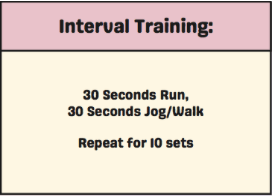
INTERVAL TRAINING


Interval Training: Build Stamina and Boost Endurance
Embrace the challenge of interval training – a path to boosting your stamina and endurance over weeks.


Weeks 1-3: Run for 30 Seconds, then jog/ walk for 30 Seconds to build your stamina
Weeks 4-12: Continually increase the duration of the intervals to challenge yourself and increase your stamina

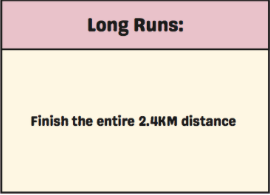
LONG RUNS


Aerobic Base Building Through Long Runs
Lace up and hit the road! These long runs are designed to enhance your aerobic base and beat your previous timings.


Weeks 1-12: Start slow to build your aerobic base. However, you should continuously try to beat your previous run’s timing. Build your muscle memory by going on a long run at least twice a week!

Tip: Don’t forget to consume more carbohydrates in the 2 days leading up to your test to load up on fuel for your body. 

You did it! You’ve reached the finish line of your IPPT journey, and that $500 incentive is within your grasp. We at King of Strength are truly proud of your dedication and hard work. Now, it’s time to take that next step and schedule your IPPT. Head over to our Schedule + Rates page to book your slot and get closer to cinching that gold.

Remember, your success is our success, and we can’t wait to hear about your incredible achievements. Share your results with us on Instagram @/kingofstrength, and don’t forget to join us in class to maintain your newfound strength and vitality. Keep up the fantastic work!


KOS Students in Strength and Conditioning Class
Our dedicated students thriving in the Strength and Conditioning class, putting in the hard work.

Unlock Your $500 Gold: Your Ultimate IPPT Success Blueprint

Let’s face it, the idea of an extra $500 sounds pretty appealing, doesn’t it? We get it – the IPPT may not be your favorite thing in the world, but trust us, that cash incentive can work wonders as motivation.

The path to acing your IPPT isn’t a walk in the park, but remember, nothing truly rewarding ever is. So, if you’re doubting yourself or unsure where to begin, relax, we’ve got your back! Before diving into your training program, it’s essential to gauge your starting point to steadily improve your reps and timing.

And when in doubt, lean on our friendly coaches for guidance. They’re here to help you tailor a workout plan that suits your fitness level and propels you toward your maximum capabilities. Curious? Keep reading to unlock the ultimate IPPT success blueprint and make that $500 your reality!

THE TRAINING PLAN

Always begin your workouts with stretches and warm-ups. A simple warm-up like the ones you do before every class at KOS is sufficient. This helps lessen the chances of injury.


3-Day Workout Plan: Push-Ups, Long Runs, and Core Training for IPPT
Get ready for a dynamic 3-day workout routine tailored for IPPT success – featuring push-ups, a 2.4 km run, and core training!


3 Days workout:

Day 1: Build muscle for push-ups (Functional King class)

Day 2: Long Run for 2.4

Day 3: Core workout for sit-ups (HardCore class) and interval Training

Day 4: Rest and Repeat

Don’t forget your rest days! They are just as important as your workouts. Letting your muscles rest and recover properly allows you to train at a higher intensity. 

Protip: plan your rest days before and after your long runs! 

CORE & PUSH-UPS

Similarly to our classes, the exercises should be done in a circuit.


Push-Ups and Core Exercise: From 30 Seconds to 1 Minute Sets
The gradual progression from 30-second sets to one-minute sets as part of your IPPT journey


Week 1: Start out with 3-5 sets of 30 Seconds per exercise. 

Weeks 2-4: Progressively increase the intensity of each exercise by increasing the duration from 30 Seconds to 1 Minute.

Weeks 5-12: Continue to increase the duration of exercise while increasing the number of sets done per workout!

INTERVAL TRAINING


Interval Training: Build Stamina and Boost Endurance
Embrace the challenge of interval training – a path to boosting your stamina and endurance over weeks.


Weeks 1-3: Run for 30 Seconds, then jog/ walk for 30 Seconds to build your stamina
Weeks 4-12: Continually increase the duration of the intervals to challenge yourself and increase your stamina

LONG RUNS


Aerobic Base Building Through Long Runs
Lace up and hit the road! These long runs are designed to enhance your aerobic base and beat your previous timings.


Weeks 1-12: Start slow to build your aerobic base. However, you should continuously try to beat your previous run’s timing. Build your muscle memory by going on a long run at least twice a week!

Tip: Don’t forget to consume more carbohydrates in the 2 days leading up to your test to load up on fuel for your body. 

You did it! You’ve reached the finish line of your IPPT journey, and that $500 incentive is within your grasp. We at King of Strength are truly proud of your dedication and hard work. Now, it’s time to take that next step and schedule your IPPT. Head over to our Schedule + Rates page to book your slot and get closer to cinching that gold.

Remember, your success is our success, and we can’t wait to hear about your incredible achievements. Share your results with us on Instagram @/kingofstrength, and don’t forget to join us in class to maintain your newfound strength and vitality. Keep up the fantastic work!


KOS Students in Strength and Conditioning Class
Our dedicated students thriving in the Strength and Conditioning class, putting in the hard work.

Expert Tips from Dr Bryan Wang: Running an Injury-free Marathon

Expert Tips from Dr Bryan Wang: Running an Injury-free Marathon

In the realm of sports, we often hear about the intense impacts and injuries that boxers endure, but what might surprise you is that even a seemingly straightforward activity like running isn’t immune to its fair share of potential risks and injuries, especially when it comes to long-distance endeavors like the challenging 42 km marathon. What’s even more intriguing is how many boxing enthusiasts are now crossing into the world of running to enhance their stamina and endurance. If you’re one of them, or simply a running enthusiast seeking to run injury-free, you’re in for a treat.

In this post, we’ve partnered with a respected orthopedic expert, Dr. Bryan Wang, founder of Beacon Orthopaedic Clinic, to bring you invaluable guidance and insights to keep you on the right track, quite literally, as you lace up for your marathon journey. So, let’s lace up and dive into the wisdom shared by a medical expert to make your running experience not only safer but also more enjoyable.

How to prepare for the long run

We had a chat with Dr. Bryan Wang, who is an experienced orthopaedic surgeon and an avid marathon runner himself. He aptly categorizes the journey into 3 logical phases – Before (pre-run), During the run, and After (Post run) phase. Each phase will have its own set of planning and precautions to be adhered to so as to keep the body in good shape.

1. Before the Run

Prepare for a distance that suits your body. Running a full marathon isn’t for everyone to start with. If you want to build up your endurance, it takes a lot of dedication and hard work to get your body in shape.

If you’re new to running, it’s best to start with leisurely walks and gradually progress to brisk walks before transitioning to running. The key is to increase your mileage by about 10-15% each week to build your body’s endurance and stamina over time. It can take a while to reach the 42 km level, but with consistent effort, it’s achievable.

It is necessary to have a training plan and commit to it if you want to complete a full marathon.

A group of marathon runners racing together in unity
A team of marathon runners racing together

2. During the Run

Before going for a run, it’s important to stretch and warm up properly. It’s crucial to make sure that every part of your body is warmed up and ready to go. For example not just calf muscles but also abdomen muscles, shoulder blades, etc. Just like a rubber band that snaps at its weakest spot even though other points can stretch and flex well.

Wear proper footwear. It should be something that fits your foot contours well and provides good padding for the impact that your foot would endure during the run.

During the run hydration every 2 km is recommended (that is how the water stations are also stationed)

Sports drinks or energy bars can be taken after an hour in the run… so that’s only needed after you have covered the halfway mark (20 km onwards), according to Dr. Wang.

After a while, it’s a lot of mind-over-matter that drives you towards the finishing line.

3. After the Run

Post run it’s good to replenish your muscle energy and fluids. Sports drinks, bananas, or a protein-rich meal would be ideal. It’s important to keep moving and walk a bit to enable a gradual cool down.

Organized marathon events may have a medical tent if one needs medical attention. Otherwise for the post-run sprains and strains the RICE technique (rest, ice, compression, and elevation) can provide quick relief. However, one must not delay seeking medical help if a knee joint or muscle condition is experienced.

Get Set and Go

The journey to conquering a 42 km marathon is often as much a test of your mind as it is of your body. While training hard is a key part of the equation, maintaining a healthy, injury-free body is equally vital. Dr. Bryan Wang’s expert guidance offers a valuable compass for runners seeking to meet both of these crucial goals. It’s not just about going the distance; it’s about doing it with a robust body and a determined mind.

Ready to take the next step? Explore our Schedule + Rates page to kickstart your path to success.

6 Reasons Exercise Is Good For Your Mental Health

How important is your mental well-being to you?

In today’s busy world, we often forget about our mental well-being. Just like we care for our physical health, our mental health deserves attention, too. Life’s ups and downs can sometimes throw us off balance, but there’s a simple solution: exercise. We’ll show you why it matters and share practical insights from our members. Join us on this journey to better mental health through exercise


Illustration of a human outline with a heart on the brain.

  1. Sharper memory and thinking 
    Exercise can boost our memory and thinking by improving sleep and mood and reducing stress and anxiety. Problems in these areas frequently cause or contribute to cognitive impairment.
  2. Higher self-esteem 
    Regular exercise positively influences our self-esteem and how we view ourselves. It can also enhance our mood.
  3. Better sleep 
    Exercise improves sleep quality. It increases the overall amount of time you spend asleep and the amount of time you spend in slow-wave sleep, aka deep sleep. Slow-wave sleep is the most restorative stage of sleep.
  4. Help with depression and anxiety 
    Mood-enhancing chemicals called endorphins are released into your bloodstream during and after being active. These are the body’s natural painkillers and are responsible for the ‘feel good’ factor. They also help to relax muscles and relieve tension in the body.
    Also, when you’re exercising, your mind focuses on achieving the goals you set out for the workout and not the negative thoughts that are usually lingering.
  5. Connecting with people 
    When you join a group class, doing team activities can help you meet new and like-minded people. It is a great avenue to make new friends.
  6. Introduce a feeling of personal achievement
    Goal setting is a great way to improve your mental agility by providing a sense of achievement after having accomplished a goal.
Some comments made by our trainees:

  • “The gym is my happy place”
  • “Boxing helps relieve my stress”
  • “I am able to express my frustrations through boxing”
  • “The only time my mind is free is when I come to the gym”
  • “Boxing is my coping mechanism”
  • “Good outlet for mental health”
  • “Boxing has helped me so much in terms of confidence and mental health”

Illustration of a person on the floor looking sad with a helping hand reaching down.
Sometimes, all it takes is a helping hand to lift you up.


Before we wrap up, we’d like to share some inspiring stories from our community. Two of our KOS members, Vishnu and Priscilla, have embarked on their own journey to support mental well-being. Vishnu’s Trident Therapy and Priscilla’s Range Counselling Services are here to lend a helping hand. Don’t hesitate to contact them if you’re seeking guidance because, as we’ve emphasized throughout this article, your mental health is a priority.


Vishnu
Company Name: Trident Therapy
Website: https://tridenttherapy.com
https://tridenttherapy.com/is-therapy-for-me/
Priscilla
Company Name: Range Counselling Services
Website: https://rangecounsellingservices.com
Email: hello@rangecounsellingservices.com

For more information on our rates and how you can join our community, visit our Schedule + Rates page. Together, let’s prioritize our well-being and support one another.

Signing off with a fist bump,

Lekha


Some references:
https://www.helpguide.org/articles/healthy-living/the-mental-health-benefits-of-exercise.htm
https://www.waldenu.edu/online-bachelors-programs/bs-in-psychology/resource/five-mental-benefits-of-exercise
https://www.mind.org.uk/information-support/tips-for-everyday-living/physical-activity-and-your-mental-health/about-physical-activity/
https://www.healthnavigator.org.nz/healthy-living/p/physical-activity-mental-health/
https://www.futurefit.co.uk/content-hub/mental-health-week-4-mental-health-benefits-of-exercise/
https://www.health.harvard.edu/mind-and-mood/exercise-can-boost-your-memory-and-thinking-skills
https://www.bbc.com/news/education-56763189
https://www.helpguide.org/articles/mental-health/building-better-mental-health.htm
https://www.sleep.org/exercise-affects-sleep/
https://bellarinesmc.com.au/exercising-your-mental-health-muscle/