

Achieve Strength & Conditioning
Team KOS, 14 November 2018
Unlocking the Power Within: How Boxing Elevates Mind and Body
Boxing, with its explosive and powerful nature, offers far-reaching benefits that extend beyond the ring. It’s not just about throwing punches; it’s a holistic approach to harnessing strength and conditioning. In the realm of fitness, the anaerobic style of boxing shines as a versatile contender for a wide range of workouts. But it’s not one-size-fits-all; it’s about crafting routines tailored to your unique physical needs and level of involvement.
In this article, we invite you to delve into the world of boxing and discover the remarkable ways it transforms both your body and mind. The journey to becoming unbreakable, both physically and mentally, is an art that demands unwavering determination, a solid foundation, and the guidance of an exceptional coach. And, as with any significant physical endeavor, it’s wise to consult a doctor before embarking on an intense training program.

How Boxing works in a nutshell
- Provides a comprehensive full-body workout, targeting and toning all major muscle groups.
- Strengthens and enhances the core muscles.
- Offers valuable self-defense skills within the context of a combat sport.
- Alleviates stress, anxiety, and pent-up aggression through the physicality of pounding heavy and speed bags.
- As boxing becomes second nature, it becomes convenient to set up home boxing equipment for training.
- Acts as an effective high-calorie burner, aiding in weight management.
- Enhances the respiratory and muscular systems through anaerobic workouts.
- Prioritizes performance and skill development over aesthetic outcomes.
- Boosts self-confidence and self-esteem.
- Fosters sportsmanship values despite being a combat sport.
Boxing is demanding. To understand how it helps the body in various ways. We have compartmentalized the structure of the sport into four significant phases.

Phase 1: The Warm-Up.
Think of a warm-up as your essential first step, a friendly introduction before the real workout begins. It might seem gentle, but it’s the secret to making you stronger. Warm-ups consist of functional exercises that gradually limber up your joints and set them in motion. Always begin at a leisurely pace. Avoid passive stretching; save it for your post-workout cool-down. These activation exercises lay the foundation for your technical and strength training
- Walking lunges get the hip joints in motion.
- High Knee Walking does not stress the muscles, instead prepares the muscles for intense workouts.
- Fast High Knees help pump up the cardiovascular and nervous systems, igniting them for the main workout.
- Walking Butt Kicks is reaching out to your butt. It relaxes and knee flexors and the hamstrings.
- Sumo Squats release the thigh tension. It works on the core, abdominals, and lower body.
- Arm Circles is an upper body warmup to loosen the shoulders, forearms, and hands.
- Jumping rope is much more than a warm-up exercise. It builds focus, hand-eye coordination, balance, and agility in footwork.
- Boxer Push-ups help strengthen the shoulders and chest
- Planks improve balance and help support posture.
- Boxer Bicycle Crunches work on the abs, and legs and improve body coordination.
These are just a few exercises to activate your body and fire up your core.

Phase 2: Strength Training
Strength training, sometimes called resistance training, forms the foundation for muscle development and motor skill enhancement. This phase prepares a boxer’s body for more robust, quicker, and more powerful movements. Think of these exercises as functional, performance-focused workouts rather than mere demonstrations. They’re designed to elevate an athlete’s physical capabilities, employing compound exercises that engage multiple joints and muscle groups simultaneously.
- Pull-ups work on the posture, back, rear shoulders, and biceps. To give you that vast space so you can take cover from or hit your opponent.
- The seated cable row exercise works on the back muscles and forearms.
- Triceps Pushdowns are a great way to build muscle and work on the arms. If you have sustained a prior elbow injury, it is suggested you practice under supervision.
- Dips are considered superior to push-ups. You lift your entire body weight, unlike pushups. Building body mass and majorly improving your lockout strength.
- The Overhead press builds strong arm and shoulder muscles. To shower those iron fists at lightning speeds on the opponent.
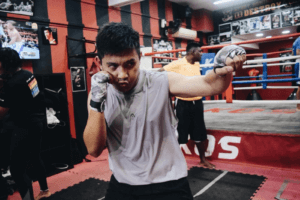
- Shadow boxing: It may look like throwing punches in the air. However, results depend on the intensity of your workout. Shadow boxing improves boxing skills, overall body fitness, stance, and flexibility.
- Sparring: It helps develop speed, control, and defense tactics. Sparring is an essential form of training to help you familiarise yourself with real-life boxing ring situations.
- Agility Ladder: This drill can have numerous variations and improves footwork tremendously.
Boxers should also incorporate free weight exercises into their training regimen because boxing is a dynamic and mobile sport.

Phase 3: Power Training
Power training demands quick and agile movements, but it also comes with a heightened risk of injury. To prepare for power training, you first establish a strong foundation through strength training. The correct technique is crucial at this stage. As you become/ attuned to your body’s rhythm and capabilities, you’ll naturally adapt to the necessary techniques and fluidity. Remember, every move in boxing has a scientific aspect. Engaging in power training elevates your speed, stability, and overall technique to a higher level.
- Back squats: They strengthen the lower body. The correct technique where the hips extend and go lower than the knees transfers the force from the feet to the hips, the core, and effectively when you launch up to punch. Back squats maximize the jump in return aiding the impact of your punch.
- Clean and Press: Lift as much weight as the body can take retaining its right position. It demands the tightening of the core and back, throughout. Hip extension plays a vital role in balancing the weight of your body. Keep the bar/dumbbells/kettlebells moving except for brief pauses between sets. Squats take power from the ground up to hand, as boxing requires.
- Kettlebell Training: Boxing requires ballistic movements. The kettlebell exercises the muscles, their contractions, and speed. The generation of force after training is how boxers pack that powerful punch. Basic movements like one and two-arm swings, clean, press and push presses are essential before moving on to more complex exercises.
- Resistance Bands: Core strength is a must for reliable and powerful movements. It helps in rotational exercises.
Here are a few example exercises to incorporate into your routine. The aim of power training is to engage in dynamic exercises that provide your body with a significant power boost without leaving you feeling overly fatigued.
Phase 4: Conditioning
In the boxing ring, maintaining a relentless yet rhythmic pace is crucial. This is where conditioning takes center stage. Conditioning mirrors the demands of an actual boxing match, requiring brief but intense bursts of exercise. While exercises like bench presses, mountain climbers, burpees, and pushups contribute to conditioning, boxing requires a unique approach to fitness.
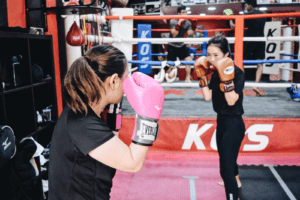
Conditioning involves high-intensity interval training (HIIT), a method that fine-tunes your body through anaerobic activities. It consists of swiftly alternating between fast-paced exercises in short bursts, with minimal to no rest in between.
- Battle Rope: 30-40 seconds of intense waving works on the upper body. There are multiple variations to use ropes. Take breaks with light footwork and get back in action with flexible arm movements but a firm lower body and core. Repeat.
- Heavy bag: Work your punch combinations on the heavy bag for 30-60 with squats after each combo and repeat.
Mix your sets with activities like sprints, leisurely jogs, high-knee jump ropes, and more. Customize your circuits to match your needs and abilities. Notably, shadow boxing stands out as the top choice for interval training, helping you maintain your stance and sharpen your skills.
After intense workouts always remember to relax your muscles to avoid cramps and muscle spasms. Gradually turn to passive stretching for up to 10 seconds to calm the body. These exercises include:
- Neck Rotations
- Hamstring Stretch
- Thigh Stretch
- Chest Stretch
- Quadriceps stretch
In the quest for ultimate strength and conditioning through boxing, we’ve unveiled the transformative power of this sport for your body and mind. So, grab a refreshing, calorie-rich drink, and consider joining us at KOS.
Remember, no matter life’s challenges, boxing will always stand by your side, offering its enduring benefits. Curious about our Schedule and Rates? Explore them here and take the next step in your journey with us.


Achieve Strength & Conditioning
Team KOS, 14 November 2018
Unlocking the Power Within: How Boxing Elevates Mind and Body
Boxing, with its explosive and powerful nature, offers far-reaching benefits that extend beyond the ring. It’s not just about throwing punches; it’s a holistic approach to harnessing strength and conditioning. In the realm of fitness, the anaerobic style of boxing shines as a versatile contender for a wide range of workouts. But it’s not one-size-fits-all; it’s about crafting routines tailored to your unique physical needs and level of involvement.
In this article, we invite you to delve into the world of boxing and discover the remarkable ways it transforms both your body and mind. The journey to becoming unbreakable, both physically and mentally, is an art that demands unwavering determination, a solid foundation, and the guidance of an exceptional coach. And, as with any significant physical endeavor, it’s wise to consult a doctor before embarking on an intense training program.
How Boxing works in a nutshell
- Provides a comprehensive full-body workout, targeting and toning all major muscle groups.
- Strengthens and enhances the core muscles.
- Offers valuable self-defense skills within the context of a combat sport.
- Alleviates stress, anxiety, and pent-up aggression through the physicality of pounding heavy and speed bags.
- As boxing becomes second nature, it becomes convenient to set up home boxing equipment for training.
- Acts as an effective high-calorie burner, aiding in weight management.
- Enhances the respiratory and muscular systems through anaerobic workouts.
- Prioritizes performance and skill development over aesthetic outcomes.
- Boosts self-confidence and self-esteem.
- Fosters sportsmanship values despite being a combat sport.
Boxing is demanding. To understand how it helps the body in various ways. We have compartmentalized the structure of the sport into four significant phases.
Phase 1: The Warm-Up.
Think of a warm-up as your essential first step, a friendly introduction before the real workout begins. It might seem gentle, but it’s the secret to making you stronger. Warm-ups consist of functional exercises that gradually limber up your joints and set them in motion. Always begin at a leisurely pace. Avoid passive stretching; save it for your post-workout cool-down. These activation exercises lay the foundation for your technical and strength training
- Walking lunges get the hip joints in motion.
- High Knee Walking does not stress the muscles, instead prepares the muscles for intense workouts.
- Fast High Knees help pump up the cardiovascular and nervous systems, igniting them for the main workout.
- Walking Butt Kicks is reaching out to your butt. It relaxes and knee flexors and the hamstrings.
- Sumo Squats release the thigh tension. It works on the core, abdominals, and lower body.
- Arm Circles is an upper body warmup to loosen the shoulders, forearms, and hands.
- Jumping rope is much more than a warm-up exercise. It builds focus, hand-eye coordination, balance, and agility in footwork.
- Boxer Push-ups help strengthen the shoulders and chest
- Planks improve balance and help support posture.
- Boxer Bicycle Crunches work on the abs, and legs and improve body coordination.
These are just a few exercises to activate your body and fire up your core.
Phase 2: Strength Training
Strength training, sometimes called resistance training, forms the foundation for muscle development and motor skill enhancement. This phase prepares a boxer’s body for more robust, quicker, and more powerful movements. Think of these exercises as functional, performance-focused workouts rather than mere demonstrations. They’re designed to elevate an athlete’s physical capabilities, employing compound exercises that engage multiple joints and muscle groups simultaneously.
- Pull-ups work on the posture, back, rear shoulders, and biceps. To give you that vast space so you can take cover from or hit your opponent.
- The seated cable row exercise works on the back muscles and forearms.
- Triceps Pushdowns are a great way to build muscle and work on the arms. If you have sustained a prior elbow injury, it is suggested you practice under supervision.
- Dips are considered superior to push-ups. You lift your entire body weight, unlike pushups. Building body mass and majorly improving your lockout strength.
- The Overhead press builds strong arm and shoulder muscles. To shower those iron fists at lightning speeds on the opponent.
- Shadow boxing: It may look like throwing punches in the air. However, results depend on the intensity of your workout. Shadow boxing improves boxing skills, overall body fitness, stance, and flexibility.
- Sparring: It helps develop speed, control, and defense tactics. Sparring is an essential form of training to help you familiarise yourself with real-life boxing ring situations.
- Agility Ladder: This drill can have numerous variations and improves footwork tremendously.
Boxers should also incorporate free weight exercises into their training regimen because boxing is a dynamic and mobile sport.
Phase 3: Power Training
Power training demands quick and agile movements, but it also comes with a heightened risk of injury. To prepare for power training, you first establish a strong foundation through strength training. The correct technique is crucial at this stage. As you become/ attuned to your body’s rhythm and capabilities, you’ll naturally adapt to the necessary techniques and fluidity. Remember, every move in boxing has a scientific aspect. Engaging in power training elevates your speed, stability, and overall technique to a higher level.
- Back squats: They strengthen the lower body. The correct technique where the hips extend and go lower than the knees transfers the force from the feet to the hips, the core, and effectively when you launch up to punch. Back squats maximize the jump in return aiding the impact of your punch.
- Clean and Press: Lift as much weight as the body can take retaining its right position. It demands the tightening of the core and back, throughout. Hip extension plays a vital role in balancing the weight of your body. Keep the bar/dumbbells/kettlebells moving except for brief pauses between sets. Squats take power from the ground up to hand, as boxing requires.
- Kettlebell Training: Boxing requires ballistic movements. The kettlebell exercises the muscles, their contractions, and speed. The generation of force after training is how boxers pack that powerful punch. Basic movements like one and two-arm swings, clean, press and push presses are essential before moving on to more complex exercises.
- Resistance Bands: Core strength is a must for reliable and powerful movements. It helps in rotational exercises.
Here are a few example exercises to incorporate into your routine. The aim of power training is to engage in dynamic exercises that provide your body with a significant power boost without leaving you feeling overly fatigued.
Phase 4: Conditioning
In the boxing ring, maintaining a relentless yet rhythmic pace is crucial. This is where conditioning takes center stage. Conditioning mirrors the demands of an actual boxing match, requiring brief but intense bursts of exercise. While exercises like bench presses, mountain climbers, burpees, and pushups contribute to conditioning, boxing requires a unique approach to fitness.
Conditioning involves high-intensity interval training (HIIT), a method that fine-tunes your body through anaerobic activities. It consists of swiftly alternating between fast-paced exercises in short bursts, with minimal to no rest in between.
- Battle Rope: 30-40 seconds of intense waving works on the upper body. There are multiple variations to use ropes. Take breaks with light footwork and get back in action with flexible arm movements but a firm lower body and core. Repeat.
- Heavy bag: Work your punch combinations on the heavy bag for 30-60 with squats after each combo and repeat.
Mix your sets with activities like sprints, leisurely jogs, high-knee jump ropes, and more. Customize your circuits to match your needs and abilities. Notably, shadow boxing stands out as the top choice for interval training, helping you maintain your stance and sharpen your skills.
After intense workouts always remember to relax your muscles to avoid cramps and muscle spasms. Gradually turn to passive stretching for up to 10 seconds to calm the body. These exercises include:
- Neck Rotations
- Hamstring Stretch
- Thigh Stretch
- Chest Stretch
- Quadriceps stretch
In the quest for ultimate strength and conditioning through boxing, we’ve unveiled the transformative power of this sport for your body and mind. So, grab a refreshing, calorie-rich drink, and consider joining us at KOS.
Remember, no matter life’s challenges, boxing will always stand by your side, offering its enduring benefits. Curious about our Schedule and Rates? Explore them here and take the next step in your journey with us.



Copyright © 2023


